At some point in this blog, the author
will get a little personal in her choices
of names due to their meanings
throughout the three novels, however
trite.
Once upon a time, there was a young woman named Sarah whose husband was named John. The winds of trade made them a union. For her, privileged in her own land, she met some discomfort with her new family because Sarah was a Jewess and John was Catholic in Nova Scotia in the early 1800’s. As noted below, one can perceive that Sarah knew Shakespeare, especially about the star-crossed couple, Romeo and Juliet. (By the way, Sarah in Hebrew means Hebrew name that means “princess,” “noblewoman,” or “lady” due to the biblical wife of Abraham.) The couple had a son they named Arthur in 1889. During the time of his birth, “Arthur” ranked 20th in popularity; and it bore the following meanings: “bear,” “Thor,” “eagle,” and “strong man.” The continuation of the family origin story is unknown. (Much is conjecture. Nonetheless, Grandfather Rose was a builder of wooden ships that sailed to far lands. Arthur Rose became an accountant for the Singer Sewing Machine Company, which became the Singer Corporation in the 1900s. Arthur was assigned to the Mexico hub.)
The author surmises that Sarah knew the story of Romeo and Juliet when she gave Arthur his middle name coupled with the surname—Montague Rose. This insight comes when we think of what Juliet said to Romeo about the meaning of a name.

Illustration
Mask On Book. Classical white Venetian mask on old book against dark background (Dreamstime.com)
In Act II, Scene II, Juliet implies that names are arbitrary and do not change the essence of Romeo whose family name is Montague, making him an enemy of her family. In their forbidden moments, Juliet thinks over Romeo’s surname: “What’s in a name that which we call a rose / By any other word would smell as sweet?” Her words imply that, though names carry immense meaning, heritage, prejudice, and/or power, her love was in true form. When Sarah took to heart what was spoken by Juliet, did Sarah identify her circumstances with any of the implications from the family into which she married? Her suffering was twofold, for her own family disowned her for marrying a Catholic. The exogamy practice, which prevails in certain cultures, was both ethnic and religious in nature.
So, from a pragmatic perspective, name labels matter a lot, for they reflect culture, heritage, and/or history. They can also, carry baggage and influence social and business perceptions. They can create stereotypes. But from a philosophical perspective, a name is simply a label or a social convention; and It should not affect the value of the named person.
Basically, the origin of a name can be from a trade, a location, or bestowed affection. An example of this is the name Armentano, which can indicate both a place, Armento, in Calabria and Basilicata, Italy, and a trade name (Armento) as cattle herder.
A name can contain identity and meaning—aspirations, hopes, or family history to guide a person’s identity, A legendary example of this is the birth of Siddhartha Gautama. According to Buddhist legend, Queen Maya had a dream, during which time a white elephant (explained below) entered her side, When she awoke, she realized she was pregnant. She knew of the prophecy beforehand in which case, if the child born were to remain home, the child would become a ruler; however, if the child were to leave home, the child would become a universal leader. Queen Maya decided to name her neonate Siddhartha, a Sanskrit name that means “one who has attained his goals.”
As for the symbolism of the “white elephant,” it represents the sacred nature of Maya’s pregnancy—in that a significant and powerful being would be born—foreshadowing the auspiciousness of her son’s birth would highlight wisdom to be brought to mankind through him, thus the Awakened One (Buddha).
Names and their meanings play an important part in the naming of various characters in the three novels: Book I introduces Dara who is named after my lovely dance teacher of Raqs Sharqu (Arabic name for “Eastern Dance”, Belly Dance in English). Her name was Maja (an alias) and was born in Egypt. Nona, which means “Nine” (or “ninth”) is also introduced in Book I. She was named after the first born of my college mentor (chief librarian). Nona foreshadows Ana in that the word “nona” is often used as a prefix in a number of scientific and other technical terms (e.g., nonapeptide).
In Book III, Ana, an MIT physicist, was named after a dear high school friend who felt betrayed because I married the son of the colonel who fired her father, a civilian personnel officer who sold honorable discharges for monetary gain). I do not think my friend knew why her father was discharged.
Ana is a name I would have given myself if my Father had not told me, when I was about five, that I should never let my name Armida be changed. In some ways, I betrayed him because, when in high school, I gave myself the nickname “Mimi” and then, during my federal career, “Armee,” pronounced “Army.” Then, there was this girl I knew who would call me “Army Navy” for “Armida Nagy.” What a drag! Father just did not know that my name was mispronounced and misspelled all too often. It is only now that I am long in the tooth that I embrace my given name. This was my secret from my dad.
In all three novels, there is one name that holds an honorary place. The name is “Andrew, or variations thereof. of my Father’s given name, meaning “manly,” “strong,” or “brave.” He was all three in every sense of the word. His characteristics are reflected in the characters in the trilogy. I was the apple of his eye, and he was my hero.
One thing is certain, however, about the women of the Armida Trilogy. They all showed a potential for leadership. Even the Dalai Lama contemplates on reincarnating as a woman since he believes women are particularly suited for leadership due to their inherent compassion. He surmises that, if there were more female leaders, the would would be more peaceful. In most instances, in their compassion, they also know how to give and to instruct, instead of take, take, take.
What’s in a name? Everything and nothing at all. I will settle for “I am that I am” . . . a vibrant part of the universal eye of consciousness, being. Or as Popeye said in the 1933 animated film, “I yam what I yam.”
Illustration
“Mind’s Eye: AI Abstract Poartrait of Human Consciousness and Energy Flow“ (Dreamstime.com)

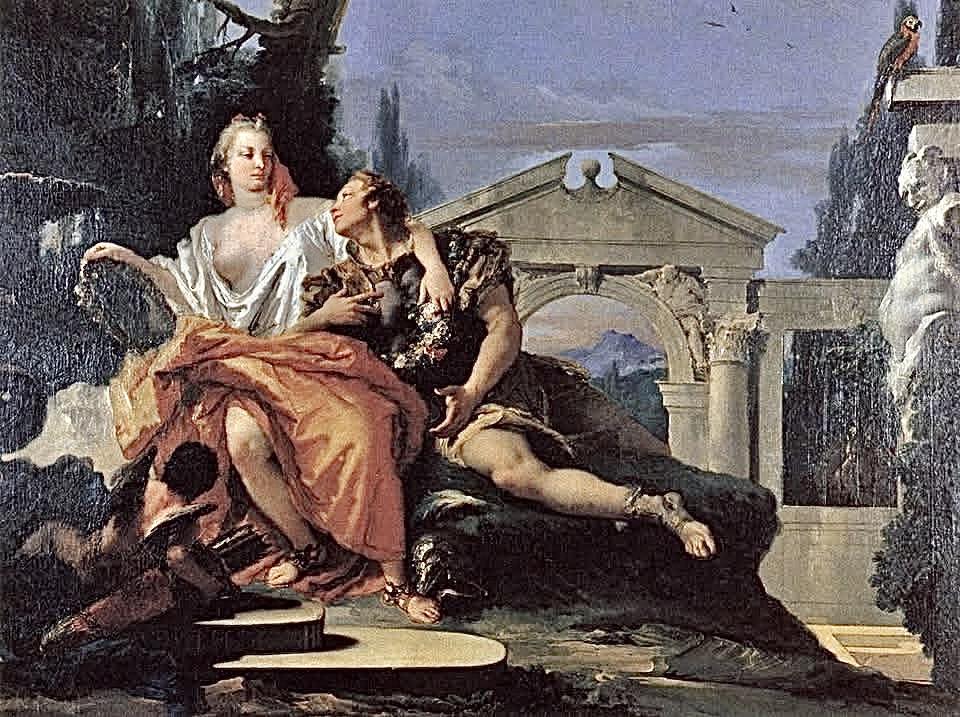
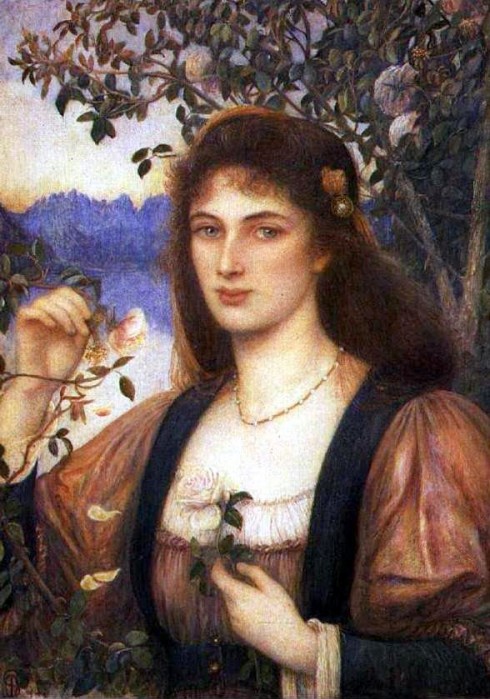
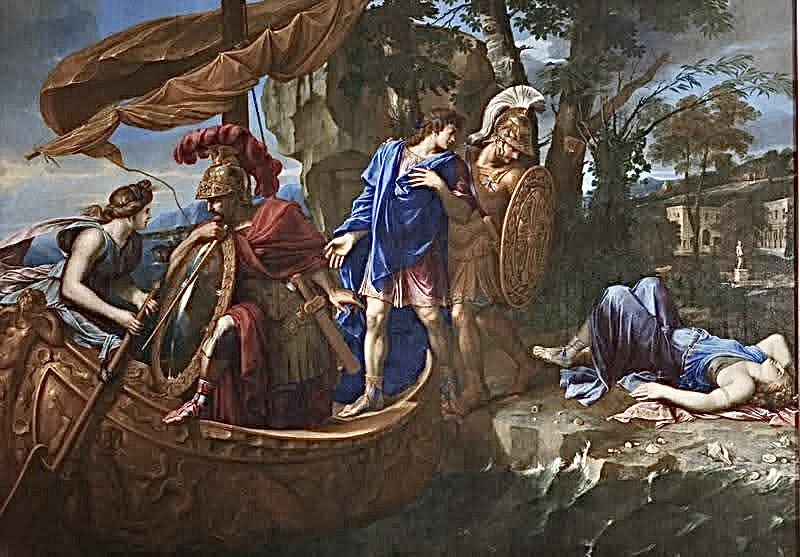
The Armida Trilogy, which is not named after the author’s given name per se, is named after a fictitious character, Armida, with historical and literary connections: A Damascus warrior-queen from the 1st Crusade in Torquato Tasso’s Gerusalemme Liberata (1591). Tasso’s epic poem had inspired numerous artists and composers, each interpreting Armida’s character in unique ways. As such, she embodies the archetype of the forsaken woman in literature. Yet, many view Armida as a more relatable and sympathetic figure, adding depth to her portrayal. For more information about the various artists and composers who were inspired by Tasso’s Gerusalemme Liberata,