

The science: “Light energy, also known as radiant energy, is a form of kinetic energy carried by electromagnetic waves composed of photons, which allows humans to see and which powers many natural and technological processes. It can move through empty space because it does not require a medium to propagate. It is produced when electrons in atoms gain energy—often from heat or excitation—and release this energy as photons, which are tiny packets of energy.”
An unpublished chapter is offered here to appear between Chapters 23 and 24. See the text below:
Chapter 23-E
E = hw | Light Energy[i]
Chapter 23-E
E = hw | Light Energy[i]
It was time for Ana to sojourn to the reestablished Sakya Monastery from Tibet to Dehra Dun, India. The recommendation came from Kiran to visit The Sakya Monastery that had relocated from Tibet to northern India due to the mass diaspora in 1959 when People’s Republic of China (PRC) under Mao Zedong invaded Tibet for themselves. Many of the scholars and monks at that monastery made it their task to smuggle as many manuscripts from their majestic library that once held over 84,000 manuscripts since its founding. Perhaps, she would be blessed in filling up voids in her practice with the help from their principal deity, Manjushri, the manifestation of transcendent wisdom. In her heart of hearts, she dreamed her sojourn was important.
There was a knowing to go there, and she thought, at first, it was because of its illustrious treasure of canons preserved miraculously. (The Sakya monks and scholars saved a number of scrolls from the original Sakya Monastery in Tibet by smuggling them to India to keep the Tibetan Sakya tradition alive and flourishing.) She further imagined there she would meet an emanation of Manjushri, the bodhisattva of transcendental wisdom, to guide her further—to help her to remove hindrances she was not acknowledging. The depth of Vajrayana was immeasurable, and the Sakyas were keepers of such knowledge. Secretly, she wondered how Sakya Master Sönam Tsemo in 1182 accomplished the incredible feat of passing away without leaving his body behind and who took his puppy with him!
Kiran made all the arrangements with the King to assign his Pilatus PC-24 jet for her travel to and from Dehra Dun along with offerings. It was mid-October 2029, shortly after the passing of Tulku Chimed Tsering Rinpoche. There was strong turbulence flying over the westerly mountains of the Kingdom of Bhutan, over Sikkim, Nepal, and Uttarakhand, but the PC-24 could easily operate up to a maximum altitude of 45,000 feet, making it suitable for high-altitude operations. The king of the Wangchuck dynasty and his minister wanted to keep her safe.

The Oldest Sakya Monastery taken over by China
The original Sakya Monastery, now designated as a Buddhist temple, is in Sa Jia Xian, Ri Ka Ze Shi, China (formerly, in Tibet). It still holds thousands of documents.
Ana was embarrassed by the elaborate reception she received at the Sakya Monastery. She met them all, wishing her mentor, her personification of Manjushri, would manifest to her that day. But it did not happen. Of all the major lamas, except for two, were from the Sakya lineage. She presented the offering contained in an elaborate wooden box from the King of the Kingdom of Bhutan. She knew not the contents, and she bowed before them, walking backwards while facing them until she reached the exit and headed straight to the nunnery.
Ana partook of the Vajrayogini practice on the 25th lunar day, the highest teaching and practice that emphasizes a rapid path to enlightenment through the embodiment of divine feminine wisdom and compassion. She did not need an empowerment from a Sakya lama, for she had already had such an initiation.
She had arrived three days before the tantric guru Padmasambhava Tsok (early evening of the 10th lunar day (Thursday, October 27, 2033), an elaborate feast in honor of the “second Buddha” who helped establish Buddhism safely in Tibet. It was a practice that gave practitioners an opportunity to acquire merit and wisdom. It was a cool evening (54o degrees F) after three hot days (91o degrees F). On Saturday, it was Monastery maintenance day.
Still, no Manjushri!
However, on the next auspicious practice on the 29th lunar day (November 2), Ana received empowerment to practice Mahakala for all Dharma protectors the previous night. Early on it was deemed early that she merited the Mahakala empowerment[ii] before the practice. It is held that the Mahakala deity is the Tibetan protector of the Dharma and who shields the faithful from negative forces, obstacles, and spiritual hindrances.
MAHAKALA, Reified Protector of the Dharma who has varying manifestations
The sacred Mahakala Mantra is “Om Shri MahaKala Hum Hum Phat”.
Practitioners merge their consciousness with Mahakala’s unyielding compassion, allowing blessings to permeate all aspects of their lives for the sake of others and themselves.

On the feast day of Mahakala, Ana sat with her eyes partly closed, her breath slowly rising and falling, and unaware that all the other participants had left the gompa. The lama who initiated the Mahakala practice quietly sat in front of her, awaiting Ana’s conscious presence to acknowledge him. When she opened her eyes fully, she heard him say, “I am called Norbu Delek. No need to call me Rinpoche. I am here to guide you further in your Mahakala practice if you are willing. I hope I didn’t startle you out of your contemplation . . . You are the young lama from Bhutan, are you not?”
With a sense of anticipatory joy, Ana grinned widely, feeling a chill run down her spine as her hands became warm. “Yes, Lama la, I am she.” She didn’t even bother to give him her name because it felt superficial and supercilious that she had received a goal-oriented and envious spiritual name.
“Oh yes, please,” as she attempted to rise to prostrate before him. He lightly pulled her outer garb downward to prevent her from needlessly prostrating before him.
“No need for the formalities.” He noted that her heart held so much joy for the Dharma and decided he would call her Peme Yiga.
Ana smiled at him warmly. “Thank you, Lama la. I am grateful.” There he is! Manjushri is present.
Norbu Delek continued as he sat down before her. “I am a Nyingmapa like you . . . In case you do not know, the founding family of the Sakya tradition started with the Nyingma tradition. He failed to point out that the lineage of the King of the Kingdom of Bhutan was related to the original paternal ancestor of the Sakya lineage—His Holiness Ngawang Thutop Wangchuck was father of founder His Holiness Jigdal Dagchen Sakya.
“Tomorrow at Noon, we will meet at the westerly chamber of the main library to practice. I will also introduce you to others who are authorized to be in the library.”
Ana wondered, So, you are designated to represent the ancient lineage at the monastery? The Nyingma (“Ancient”) tradition is the oldest tradition of Tibetan Buddhism based on the earliest translations of Buddhist scriptures from Sanskrit into Tibetan, brought by masters like Padmasambhava, that later were revised and standardized. It is known for its Dzogchen teachings, which emphasize recognizing the mind’s natural, primordial awareness. It is both inclusive and layered in its preservation of foundational Buddhist ethics to advance esoteric practices, which includes the Sakya tradition. Above all, it holds the tradition of tertȫns, revealers of past masters who protected the Dharma until the wisdom is needed. Masters could be lay persons or monastics in this tradition.
“I want to share a bit of my background with you,” said Norbu. “I was 27 when I was assigned to become an active member at the Life and Science Institute, about three years after its inception.” He paused to see if she wanted to add to the conversation.
In her silence, he proceeded. “The Institute was founded in 1987 with His Holiness the Dalai Lama in Dharamshala, India. Its main mission was to gain understanding between the Dharma as taught by Buddha Shakyamuni and western science.
“The Institute has remained at the contemporary cutting-edge of scientific research and innovation engaged with contemplation science. As a scientist myself who dabbles in theoretical physics from time to time, I was involved in many research projects I was asked to attend.
“Starting tomorrow, we will meet in the north-facing wing of the library to practice. Are you willing and ready?”
“Oh yes. I am so thankful, Lama la,” responded Ana intently.
As Norbu rose from the zafu, he glanced at her quickly, feeling pleased that she was having a happy heart. He decided he would address her as Yiga la, for her joyous heart.
Before Ana and Norbu Delek settled into their practice together, Norbu knew there was a link between her heritage and her mother’s Jewish heritage since her mother often shared with Ana her research on the feminine. There was a need for resolution.
“Yiga, I want you to meet one of our translators who specializes in texts from the first, second and third centuries C.E. . . . In addition to Tibetan, he knows Melkite Aramaic.”
Ana looked up at him surprised. “Oh, wow . . . My mother and I had many debates about whether or not the Jesus in the Greek scriptures is historical. Yet, it is currently held that the young Jesus joined a caravan and went eastward to Odessa. I don’t know if it was by caravan or sailed there. But, as I recall, he was somewhat like Einstein in his early years . . . rambunctious rebel . . . to the point Isus, Jesus’s semitic name, was chased out of Odessa by the religious elders. He ended up in Tibet and trained in Buddhism for three years—”
“Yes, and His Highness the Dalai Lama had to deny when asked that Isus had received Buddhist training. The record is here, but you must deny it exists if we were to show it to you . . . It is politically too sensitive.” Imagine the turmoil and religious wars that would ensue, thought the lama
Ana concurred wholeheartedly. It was an oath of secrecy.
Pleased with her response, Norbu continued, “I want you to meet Dr. Samuel Safaa from the University of Washington in Seattle.”
“Will he likely have translated some of the Gnostic books that mention Isus and Mary Magdalene?”
“Ah, yes. The mistaken wife of Isus.” He looked at her, adding carefully, “He could have been a monk in Tibet. Ask Dr. Saffaa if he has written a paper on the subject. He may have it available online somewhere.”
“I wonder if I should share it with my mother.”
“That’s for you to decide, Yiga la.”

After her first day of solo practice with Norbu and meeting Dr. Saffaa, she found the PDF article of his on his translation, unredacted Melkite Aramaic, in her e-mail. After reading it, Ana synthesized what could possibly be true about Mary Magdalene (of Magdala, a fishing village on the western shore of the Sea of Galilee (suffix ene is a toponymic), Jesus, and the other disciples. Then she let it go from her mind and not deciding to share it with her mother) after she concluded what Jesus said about attachment being the sin. She was more interested in the way of the Dharma than in the way of humanity.
After her first day of solo practice with Norbu and meeting Dr. Saffaa, she found the PDF article of his on his translation, unredacted Melkite Aramaic, in her e-mail. After reading it, Ana synthesized what could possibly be true about Mary Magdalene (of Magdala, a fishing village on the western shore of the Sea of Galilee (suffix ene is a toponymic), Jesus, and the other disciples. Then she let it go from her mind and not deciding to share it with her mother) after she concluded what Jesus said about attachment being the sin. She was more interested in the way of the Dharma than in the way of humanity.
Ignoring the interpretations of Mary of Magdala and Isus as sextual couples, she focused on the agency of Mary of Magdala.[iii] She was older than he, from an affluent family, and was favored by him because she possessed a deep, intuitive understanding of his secret teachings (much of the texts had been redacted or destroyed to preserve orthodoxy to know conclusively that he kissed her on the mouth). After Jesus answers questions about the nature of matter and states of consciousness, mental factors, and the processes of the mind, the male disciples were terrified and grieved because they did not understand fully; and they recognized that it was so different from what their leaders had taught them and that also affected their overall cultural habituation.
A good example is the following dialogue: Mary of Magdala asked, “Lord, how does he who sees the vision see it—through the soul or through the spirit?” (To be noted, in Aramaic, Mary of Magdala was distinguishing between nephesh (soul) and rauch (spirit).) Jesus answered that it is seen through the mind that sits between the two, in Buddhist translation, consciousness that connects both the brain and the heart. He further revealed a higher esoteric Gnostic teaching about consciousness ascending past hostile cosmic powers—ignorance and desire—to find ultimate rest (self-liberation). Most important was that Jesus favored her because she could reason at the level that men were taught to reason. He pointed out that she was elevated as an intellectual equal to the make apostles. Women were neither encouraged to be independent nor intellectual thinkers as now.
The substitute words for missing words in the manuscripts perpetuated a misrepresentation of Jesus kissing her on the mouth or cheek. A telling bit of conversation that survived is that, when some disciples asked Jesus, “Why do you love her more than all of us?” Jesus responded with a metaphor about sight and darkness: “Why do I not love you like her? When a blind man and one who sees are both together in darkness, they are no different from one another. When the light comes, then he who sees will see the light; and he who is blind will remain in darkness.” Understanding the teaching was like seeing the light; not understanding was like remaining in ignorance. This metaphor is a very eastern form of argumentation.
Ana’s remaining month India was filled with intense practice and new approaches to what she was taught in the past. It was different because the metaphysics of the yoga asanas were now based on modern nomenclature of the biology and chemistry that produced results in yoga practice. Thus, the biology on a few of the six ancient methods—breath retention (Prana Samyama), herbal alchemy (Rasa Vadya), thermal purification (Svedana), cold immersion (Sita Snina), mindful waking (Jagarita), sacred intention aligning actions with the cosmic order (Sankalpa)—were stressed to her liking. They were mostly exploring the power of breath and sound.[iv]
For example, there is a cellular switch that fights fatigue. Every cell has a tiny engine called mitochondria, which converts every food eaten and every breath taken into energy that runs the heart, brain, and body. After the age of 45, the mitochondria stop replacing themselves. Nothing replaces them. They affect lack of sleep so that one does not feel restored from sleep. The cellular power starts failing. Yet, the mitochondria still remain in the body, intact and waiting to be restored. There is one signal that restarts the mitochondria. Science calls the signal PGC01 Alpha. One switch affects two results—aging slows down and energy is restored within two days.
She learned to use her breath to ensure heart rate variability is optimal to strengthen the diaphragm, which does not stand alone. It has two tendrils, called the crura, which directly anchor to the lumbar vertebrae and are structurally linked. When one locks due to stress, it pulls on the other. The diaphragm is part of the same nervous system. So, the switch to experience the breath—the length and depth of the exhale directly signal the longest nerve in the body, the vagus nerve, which carries the nerve traffic that connects your gut, heart, and brain. Eighty percent of one’s breath travels from the whole body to the brain. By this method of breathing, one’s breath is not limited to one’s state of mind. The slow, deep breathing strengthened the vagus nerve (nervus vaga) and helps to reduce anxiety. Better vagal tone improves heart rate variability for resilience and longevity. The diaphragm is always there to be engaged to do what it does best. It was vital to know how to breathe deeply. If the hand on the belly rises instead of the hand on the chest, a parasympathetic shift takes place in a prolonged exhale.
The Khumbhaka-Rechaka[v] was more elaborate as a breath practice, which triggers a massive surge of nitric acid that dilate blood vessels, flooding tissues with CO2 circulation. The inhale-exhale protocol* stimulates BDNF (Skt. Prana) production that grows neural connections and reverses cognitive aging. It also initiates cellular autophagy (the same response when fasting) where damaged cells are broken down and recycled). As the oxygen is dipping, it registers a low oxygen signal, HIF-1 (Alpha) known as the master regeneration switch, which becomes activated. Within 21 days of consistent practice, the body will start repairing damage incurred over years. The body then does what it is knows to do biologically from the beginning of time. It knows to respond to the language of breath.
The 111 Breath Protocol was the most fascinating because it pointed out that the breath is a neurological pathway to programming the subconscious—a breath shift goes from beta states to alpha and theta states in under two minutes. These altered states are known as “Coherent Field Resonance,” (Skt., prana vidya) the exact frequency needed for the probability outcomes desired. It should not come as a surprise that breath carries information, not just air, as confirmed by neuroscience. Every inhalation sends electrical signals through the vagus nerve that directly communicates with the subconscious mind. Literally, when breathing with intention, new reality consciousness parameters operating system. This protocol breaks the limitation pattern in seven minutes.
Here is why it works: Quantum bridge focuses breathing combined with elevated emotion creates “Coherent Brain-Heat States” where the electromagnetic field expands up to eight feet around one’s body, literally broadcasting one’s intentions into the quantum field (a measurable electromagnetic reality).
The simple 111 protocol amplifies the above-mentioned effect exponentially: One breath activates the neural networks; one breath activates intention; one breath locks into the subconscious to be repeated in specific cycles that mirror the Golden Ration found throughout nature. Quantum science calls it “Constructive Wave Interference” (resonance universal frequencies). In other words, when one’s personal field synchronizes with the quantum vacuum, probability waves collapse in one’s favor. The routine is to inhale for a set count of four seconds, hold the breath for the exact same count, and exhale for the same count. It helps to reset the nervous system that instantly shifts the body out of a fight-or-flight state. A similar Tibetan practice of “1-1-1” is the Vajrayana Nine-Round Breath also accomplishes the results.
On her last two days, Norbu Tashi Rinpoche asked Ana if there was something she would like to know before returning to her monastery.
Without any apprehension or shame, Ana blurted, “May I read the accounts of Their Highnesses Ngog Choku Dorje, Rongton Sheja Kunrig, and Chogye Trichen Rinpoche?”
Norbu’s laughter prompted his head to lift back earnestly, saying, “Why, of course!” He was surprised that she had not done that when she was helping the translators with their project. She had ample opportunity to explore their history. These were three of the prominent Sakya masters who attained the ultimate state known as the rainbow body. involving the dematerializing of the physical form into the five-colored lights that involved a very secret advanced practice.
But, when Ana asked to know about Jetsunma Kunga Trinley of the Sakya Khon family, Norbu became uneasy. Only few Sakyapas knew about her enlightened. Born in 2007, she is the first Jetsunma to be recognized a reincarnated tulku (literally, a “transformation body” of a previous enlightened lama). Unlike other lineages, the Sakya families nurture their daughters to be excellent practitioners and recognized lamas (jetsunmas).
Even the Gelug tradition of the 14th Dalai Lama maintains a clear focus on its established lineage and teachings, which does not include figures like Jetsunma. Nevertheless, His Holiness holds that women possess a greater potential for higher awareness, compassion, and sensitivity than men. He believes women are models of humanity due to their emotional intelligence and empathy. In recent times, moreover, the Drukpa Kagyu school recognizes the Jetsunma title.
Most of all, through her eye of contemplation, Ana’s mind was awake to know that there is no death as she had received the sacred Bardo teachings and their direct experiences from her yogic direct valid cognition.
Returning to Bhutan, Ana Celeste Tabbot Tosic launched her third sojourn, going beneath all practices and beliefs into the source of her existence in silence. She arrived at her adopted homeland lighter and with a deeper tonality to her voice and realized then and there to stop searching.
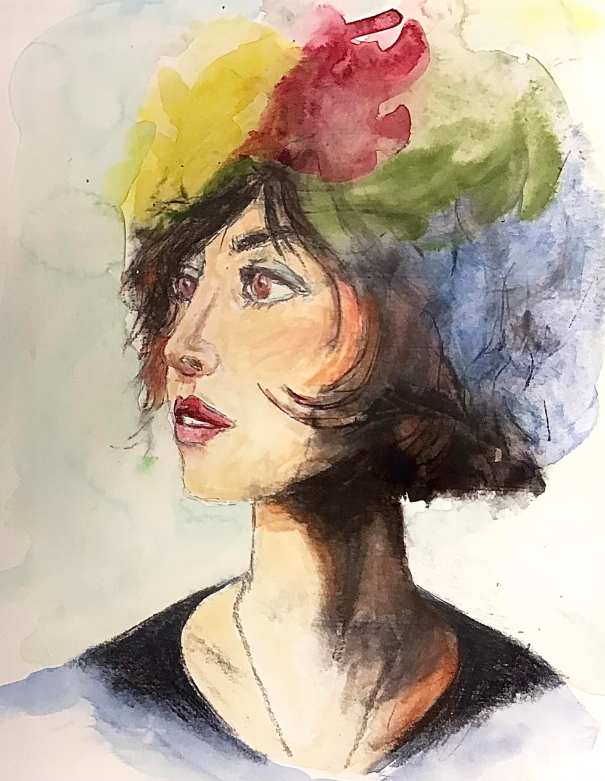
[i] E = hw. Theoretical science: “Light energy, also known as radiant energy, is a form of kinetic energy carried by electromagnetic waves composed of photons, which allows humans to see and which powers many natural and technological processes. It can move through empty space because it does not require a medium to propagate. It is produced when electrons in atoms gain energy—often from heat or excitation—and release this energy as photons, which are tiny packets of energy.”
[ii] Mahakala representation. Practitioners merge their consciousness with Mahakala’s unyielding compassion, allowing blessings to permeate all aspects of their lives for the sake of others and themselves.
[iii] The Bishop of Rome known as Pope Gregory I delivered a sermon in 591 CE that combined three distinct women named Mary as a “sinful woman” who washed the feet of Isus with her tears and wiped them with her feet; The women conflated were Mary of Magdala, Mary of Bethany (sister of Lazarus) , and the “sinful woman.” For over 2,100 years, Mary of Magdala was portrayed as a repentant prostitute instead of one who was intellectually an equal.
The Eastern Orthodox Church never adopted Pope Gregory’s conflation, for she has always been honored as a spiritual leader in the early Church and as having apostolic stature—“Equal-to-the-Apostles,” “Leader of the Myrrh Bearers” to properly embalm Isus’s body. Moreover, it was she who went to Rome to confront Emperor Tiberius to proclaim that the Christ had risen and who later moved to Ephesus to preach alongside St. John the Apostle.
[iv] Khumbhaka-Rechaka Breath Protocol: Inhale-exhale protocol: (1) Weeks on and two—daily—Inhale and exhale normally at least three times until the body feels relaxed while sitting with the back straight and the head facing forward normally. Once feeling relaxed in body and mind, take a deep breath of eight counts. Then, slowly exhale through the nose (not the mouth). DO NOT RUSH; REMAIN RELAXED. Start over, maybe at a later time, if the exhale was rushed. When the breath is fully out, hold the breath for a count of 10. At this point, the stem cells peak. The top and bottom hold creates a sustained hypoxic window that forces full deployment of the stem cells, released from the bone marrow and triggered by HIF-1(Alpha) as it floods the bloodstream. This is the regeneration window. Now the body is ready to operate optimally.
Practice this cycle with three complete rounds per session. (2) Week three—daily—add two counts to each breath of inhale, hold, exhale, and hold cycle. (3) Week four—daily—add two more counts to each breath of inhale, hold, exhale, and hold cycle. The body will adapt to the increased retentions. Perform consistently is the reward; it is not about intensity.
The following are three critical mistakes to avoid: (1) Never gasp, because severe hunger air spikes cortisol, which suppresses stem cell activity. Do not panic; only strive to the point of discomfort. (2) Always practice seated, because vagal activation during breath retention practice can cause dizziness. (3) Do not combine practice in the first two weeks with cold exposure. Cold is a suppressor on its own. Let the body get accustomed to Khumbhaka-Rechaka before layering it with other protocols.
Within 21 days, the body will start repairing years of damage to the body, for the body is know understanding the language of the breath. The body only knows balance and imbalance and rewards accordingly.—Codex Reality
[v] Bhramari Pranayana protocol. In 2012, a scientific study was performed with accidental results, indexed as PMID 22307473, that measured the nitric oxide production during the Bhramari Pranayana protocol (see below). The results of the study documented the dramatic increase in nasal cavity nitric oxide that confirmed a cascade of vascular neurological states, which are experience only through yogic practice. What the scientists were initially measuring was the gas dynamics in the sinuses. What they discovered was that the vagus nerve was consistently demonstrating the upregulation of BDNF (“Brain Derived Neurotropic Factor”)—the protein directly responsible for hippocampal neurogenesis (new neurons).
By engaging the diaphragmatic breathing with extended exhalation, which produced the parasympathetic depth required for full glymphatic activation. The alpha and theta brainwave states, induced by sustained humming, are the same states associated with neural repair and memory consolidation.
Bhramari Prana Protocol: At dawn or immediately before sleep—which are the two windows of glymphatic sensitivity when melatonin and cortisol are in their most favorable ratio and when the nervous system is predisposed toward parasympathetic activation—sit upright, spine vertical. Jaw unclenched. Lips gently sealed and teeth partly parted. Then, place the thumbs lightly over the cartilage of the ears, pressing the tragas to partially oculate external sound. This will amplify the internal sound within the skull.
Fully inhale through the nose. On the exhale, produce a continuous, low-frequency hum. Not a high or chest tone. It should be a resonant vibration felt primarily in the nasal cavity and behind the eyes. A buzzing sensation will be felt at the cribriform plate. If the vibration is felt only in the chest, lower the pitch of the hum.
Ten minutes is the minimum threshold for meaningful glymphatic and vagal effects. Twelve to 15 minutes is optimal. Do not expect systemic change at three repetitions. Continues inhale-exhale practice is what counts. Thus, be generous with one’s time during practice. Sit in silence for two to three minutes to notice the shift in neurological states. This is when the nervous system crosses into its maintenance mode.
The brain does not require more input; it requires its own condition for repair—to remove obstacles and chronic sympathetic dominance, for they prevent the natural intelligence of the brain from operating in balance.—Codex Reality___________
“
“
Chapter 23-E
E = hw | Light Energy[i]
It was time for Ana to sojourn to the reestablished Sakya Monastery from Tibet to Dehra Dun, India. The recommendation came from Kiran to visit The Sakya Monastery that had relocated from Tibet to northern India due to the mass diaspora in 1959 when People’s Republic of China (PRC) under Mao Zedong invaded Tibet for themselves. Many of the scholars and monks at that monastery made it their task to smuggle as many manuscripts (peches) and other holdings from their majestic library that once held over 84,000 ancient manuscripts since its founding. The retinue of about 500 served as vajra holders charged to keep the Tibetan Sakya tradition alive and flourishing.
There was a knowing to go there. At first, Ana thought it was because of its illustrious treasure of canons preserved miraculously. She further imagined she would meet an emanation of Manjushri, the bodhisattva of transcendental wisdom, to guide her further—to help her to remove hindrances and blind spots she was not acknowledging. The depth of Vajrayana was immeasurable, and the Sakyas were keepers of such knowledge. Secretly, she wondered how Sakya Master Sönam Tsemo in 1182 accomplished the incredible feat of passing away without leaving his body behind and who took his puppy with him! She wondered if the puppy was just a symbolic gesture.
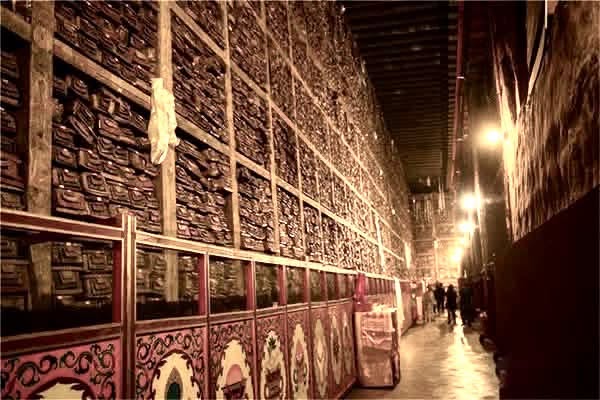
The Oldest Sakya Monastery taken over by China. Nowit is designated as the Buddhist temple is in Sa Jta Xlan, Ri Ku Ze Shi, China. It still holds thousands of manuscripts.
Kiran made all the arrangements with the King to assign his Pilatus PC-24 jet for her travel to and from Dehra Dun along with offerings. It was mid-October 2029, shortly after the passing of Tulku Chimed Tsering Rinpoche. There was strong turbulence flying over the westerly mountains of the Kingdom of Bhutan, over Sikkim, Nepal, and Uttarakhand, but the PC-24 could easily operate up to a maximum altitude of 45,000 feet, making it suitable for high-altitude operations. The king of the Wangchuck dynasty and his minister wanted to keep her safe.
Ana was embarrassed by the elaborate reception she received at the Sakya Monastery. She met them all, wishing her mentor, her personification of Manjushri, would manifest to her that day. But it did not happen. Of all the major lamas, except for two, were from the Sakya lineage. She presented the offering contained in an elaborate wooden box from the King of the Kingdom of Bhutan. She knew not the contents, and she bowed before them, walking backwards while facing them until she reached the exit and headed straight to the nunnery.
Ana partook of the Vajrayogini practice the highest teaching and practice that emphasizes a rapid path to enlightenment through the embodiment of divine feminine wisdom and compassion, on the 25th lunar day. She did not need an empowerment from a Sakya lama, for she had already had such an initiation from her previous guru.
She had arrived three days before the tantric guru Padmasambhava Tsok (early evening of the 10th lunar day (Thursday, October 27, 2033)), an elaborate feast in honor of the “second Buddha” who helped establish Buddhism safely in Tibet. It was a practice that gave practitioners an opportunity to acquire merit and wisdom. It was a cool evening (54o degrees F) after three hot days (91o degrees F). Every Saturday was Monastery maintenance day.
Still, no Manjushri!
However, on the next auspicious practice on the 29th lunar day (November 2), Ana received empowerment to practice Mahakala for all Dharma protectors the previous night. Early on it was deemed early that she merited the Mahakala empowerment[i] before the practice. It is held that the Mahakala deity is the Tibetan protector of the Dharma and who shields the faithful from negative forces, obstacles, and spiritual hindrances.
MAHAKALA, Reified Protector of the Dharma who has varying manifestations
The sacred Mahakala Mantra is “Om Shri MahaKala Hum Hum Phat”.
Practitioners merge their consciousness with Mahakala’s unyielding compassion, allowing blessings to permeate all aspects of their lives for the sake of others and themselves.

On the feast day of Mahakala, Ana sat with her eyes partly closed, her breath slowly rising and falling, and unaware that all the other participants had left the gompa. The lama, who had initiated the Mahakala practice, quietly sat in front of her, awaiting Ana’s conscious presence to acknowledge him. When she opened her eyes fully, she heard him say, “I am called Norbu Delek. No need to call me Rinpoche. I am here to guide you further in your Mahakala practice if you are willing. I hope I didn’t startle you out of your contemplation . . . You are the young lama from Bhutan, are you not?”
With a sense of anticipatory joy, Ana grinned widely, feeling a chill run down her spine as her hands became warm. “Yes, Lama la, I am she.” She didn’t even bother to give him her name because it felt superficial and supercilious that she had received a goal-oriented and envious spiritual name.
“Oh yes, please,” as she attempted to rise to prostrate before him. He lightly pulled her outer garb downward to prevent her from needlessly prostrating before him.
“No need for the formalities.” He noted that her heart held so much joy for the Dharma, deciding he would call her Peme Yiga.
Ana smiled at him warmly. “Thank you, Lama la. I am grateful.” There he is; Manjushri is present.
Norbu Delek continued as he sat down before her. “I am a Nyingmapa like you . . . In case you do not know, the founding family of the Sakya tradition started with the Nyingma tradition.” He failed to point out that the lineage of the King of the Kingdom of Bhutan was related to the original paternal ancestor of the Sakya lineage—His Holiness Ngawang Thutop Wangchuck was father of founder, His Holiness Jigdal Dagchen Sakya.
Ana smiled at him warmly. “Thank you, Lama la. I am grateful.” There he is! Manjushri is present.
Norbu Delek continued as he sat down before her. “I am a Nyingmapa like you . . . In case you do not know, the founding family of the Sakya tradition started with the Nyingma tradition. He failed to point out that the lineage of the King of the Kingdom of Bhutan was related to the original paternal ancestor of the Sakya lineage—His Holiness Ngawang Thutop Wangchuck was father of founder His Holiness Jigdal Dagchen Sakya.
“Tomorrow at Noon, we will meet at the westerly chamber of the main library to practice. We name it the Red Space . . . I will also introduce you to others who are authorized to be in the main library.”
Ana wondered, So, you are designated to represent the ancient lineage at the monastery?
The Nyingma (“Ancient”) tradition is the oldest tradition of Tibetan Buddhism based on the earliest translations of Buddhist scriptures from Sanskrit into Tibetan, brought by masters like Padmasambhava. Nyingma is known for its Dzogchen teachings, which emphasize recognizing the mind’s natural, primordial awareness. It is both inclusive and layered in its preservation of foundational Buddhist ethics to advance esoteric practices, which includes the Sakya tradition. Above all, it holds the tradition of tertȫns, revealers of past masters who protected the Dharma until the wisdom is needed. Masters could be lay persons or monastics in this tradition.
“I want to share a bit of my background with you,” continued Norbu. “I was 27 when I was assigned to become an active member at the Mind and Institute, about three years after its inception.” He paused to see if she wanted to add to the conversation.
“MLI has remained at the contemporary cutting-edge of scientific research and innovation engaged with contemplation science. As a scientist myself who dabbles in theoretical physics from time to time, I was involved in many research projects I was asked to attend.
In her silence, he proceeded. “The Institute was founded in 1987 with His Holiness the Dalai Lama in Dharamshala, India. Its main mission was to gain understanding between the Dharma as taught by Buddha Shakyamuni and western science.
“It has remained at the contemporary cutting-edge of scientific research and innovation engaged with contemplation science. As a scientist myself who dabbles in theoretical physics from time to time, I was involved in many research projects I was asked to attend.” Norbu paused momentarily.
“Starting tomorrow, Yiga la, we will meet in the west-facing wing of the library to practice. Are you willing and ready?”
“Oh yes. I am so thankful, Lama la,” responded Ana intently. grateful for a Tibetan name she knew not its meaning.
As Norbu rose from the zafu, he glanced at her quickly, feeling pleased that she was having a happy heart. He decided he would always address her as Yiga la, for her joyful heart.
Before Ana and Norbu Delek settled into their practice together, Norbu knew there was a tie between her and her mother’s compulsion for the historical feminine. Ana would have corrected him by saying that her mother is a nostalgic history buff of the archetypal femininity. In Norbu’s view, however, there was a mixture of aversion and attachment that needed resolution.
“Yiga la, I want you to meet one of our translators who specializes in Aramaic texts from the first, second and third centuries C.E. . . . In addition to Tibetan script, he knows Melkite Aramaic.”
Ana looked up at him surprised. “Oh, wow . . . My mother and I had many debates about whether or not the Jesus in the Greek scriptures is historical. Yet, it is currently held that the young Jesus joined a caravan and went eastward to Odessa. I don’t know if it was by caravan or sailed there. But, as I recall, he was somewhat like Einstein in his early years . . . rambunctious rebel . . . to the point Isus, Jesus’s semitic name, was chased out of Odessa by the Hindu-Brahmanic elders. He ended up in Tibet and trained in Buddhism for three years—”
“Yes,” Norbu interrupted apologetically. “His Highness the Dalai Lama has had to deny when asked that Isus had received Buddhist training. The record is here, but you must deny it exists if we were to show it to you . . . It is politically too sensitive.” Imagine the turmoil and religious wars that would ensue, thought the lama.
Ana concurred convincingly. It was an oath of secrecy.
Pleased with her response, Norbu continued, “I want you to meet Dr. Samuel Safaa from the University of Washington in Seattle.”
“Will he likely have translated some of the Gnostic books that mention Isus and Mary Magdalene?”
“Ah, yes . . . The mistaken wife of Isus.” He looked at her, adding carefully, “He could have been a monk in Tibet. Ask Dr. Saffaa if he has written a paper on the subject. He may have it available online somewhere.”
“I wonder if I should share it with my mother.”
“That’s for you to decide, Yiga la.”
After her first day of solo practice with Norbu and meeting Dr. Saffaa, she found the PDF article of his on his translation, unredacted Melkite Aramaic, in her e-mail. After reading it, Ana synthesized what could possibly be true about Mary Magdalene (of Magdala, a fishing village on the western shore of the Sea of Galilee (suffix ene is a toponymic)), Jesus, and the other disciples. Then, she let it go from her mind, not deciding to share it with her mother after she concluded what Jesus said about attachment being the sin. She concluded the way of the Dharma was more engaging than the way of humanity.
Ignoring the interpretations of Mary of Magdala and Isus as sextual couples, she focused on the agency of Mary of Magdala.[i] She was older than he, from an affluent family, and was favored by him because she possessed a deep, intuitive understanding of his secret teachings. Much of the surviving texts had been redacted and others destroyed to preserve orthodoxy to know conclusively that he kissed her on the mouth. After Jesus answered questions about the nature of matter, states of consciousness, mental factors, and the processes of the mind, the male disciples were terrified and grieved because they did not understand fully; and they recognized that it was so different from what their leaders had taught them and that also affected their overall cultural habituation.
A good example of his teachings is the following dialogue: Mary of Magdala asked, “Lord, how does he who sees the vision see it—through the soul or through the spirit?” (To be noted, in Aramaic, Mary of Magdala was distinguishing between nephesh (soul) and rauch (spirit).) Jesus answered that it is seen through the mind that sits between the two. (In Buddhist translation, mind is consciousness that connects both the brain and the heart.) Isus further revealed a higher esoteric Gnostic teaching about consciousness ascending past hostile cosmic powers—ignorance and desire—to find ultimate rest (self-liberation). Most important was that Jesus favored her because she could reason at the level that men were taught to reason. He pointed out that she was elevated as an intellectual equal to the make apostles. Culturally, women were neither encouraged to be independent nor intellectual thinkers as in some cultures of today.
The substitute words for missing words in the manuscripts perpetuated a misrepresentation of Jesus kissing her on the mouth or cheek. A telling bit of conversation that survived is that, when some disciples asked Jesus, “Why do you love her more than all of us?” Jesus responded with a metaphor about sight and darkness: “Why do I not love you like her? . . . When a blind man and one who sees are both together in darkness, they are no different from one another. When the light comes, then he who sees will see the light; and he who is blind will remain in darkness.” Understanding the teaching was like seeing the light; not understanding was like remaining in ignorance. This metaphor is a very eastern form of argumentation.
Ana’s remaining month India was filled with intense practice and new approaches to what she was taught in the past. It was different because the metaphysics of the yoga asanas were now based on modern nomenclature of the biology and chemistry that produced results in yoga practice. Thus, the biology on a few of the six ancient methods—breath retention (Prana Samyama), herbal alchemy (Rasa Vadya), thermal purification (Svedana), cold immersion (Sita Snina), mindful waking (Jagarita), sacred intention aligning actions with the cosmic order (Sankalpa)—were stressed to her liking. They were mostly exploring the power of breath and sound.[i]

For example, there is a cellular switch that fights fatigue. Every cell has a tiny engine called mitochondria, which converts every food eaten and every breath taken into energy that runs the heart, brain, and body. After the age of 45, the mitochondria stop replacing themselves. Nothing replaces them. They affect lack of sleep so that one does not feel restored from sleep. The cellular power starts failing. Yet, the mitochondria still remain in the body, intact and waiting to be restored. There is one signal that restarts the mitochondria. Science calls the signal PGC01 Alpha. One switch affects two results—aging slows down and energy is restored within two days.
She learned to use her breath to ensure heart rate variability is optimal to strengthen the diaphragm, which does not stand alone. It has two tendrils, called the crura, which directly anchor to the lumbar vertebrae and are structurally linked. When one locks due to stress, it pulls on the other. The diaphragm is part of the same nervous system. So, the switch to experience the breath—the length and depth of the exhale directly signal the longest nerve in the body, the vagus nerve, which carries the nerve traffic that connects your gut, heart, and brain. Eighty percent of one’s breath travels from the whole body to the brain. By this method of breathing, one’s breath is not limited to one’s state of mind. The slow, deep breathing strengthened the vagus nerve (nervus vaga) and helps to reduce anxiety. Better vagal tone improves heart rate variability for resilience and longevity. The diaphragm is always there to be engaged to do what it does best. It was vital to know how to breathe deeply. If the hand on the belly rises instead of the hand on the chest, a parasympathetic shift takes place in a prolonged exhale.
The Khumbhaka-Rechaka[i] was more elaborate as a breath practice, which triggers a massive surge of nitric acid that dilate blood vessels, flooding tissues with CO2 circulation. The inhale-exhale protocol stimulates BDNF (Skt., Prana) production that grows neural connections and reverses cognitive aging. It also initiates cellular autophagy (the same response when fasting) where damaged cells are broken down and recycled). As the oxygen is dipping, it registers a low oxygen signal, HIF-1 (Alpha) known as the master regeneration switch, which becomes activated. Within 21 days of consistent practice, the body will start repairing damage incurred over years. The body then does what it is knows to do biologically from the beginning of time. It knows to respond to the language of breath.
The 111 Breath Protocol was the most fascinating because it pointed out that the breath is a neurological pathway to programming the subconscious—a breath shift goes from beta states to alpha and theta states in under two minutes. These altered states are known as “Coherent Field Resonance,” (Skt., prana vidya) the exact frequency needed for the probability outcomes desired. It should not come as a surprise that breath carries information, not just air, as confirmed by neuroscience. Every inhalation sends electrical signals through the vagus nerve that directly communicates with the subconscious mind. Literally, when breathing with intention, new reality consciousness parameters operating system. This protocol breaks the limitation pattern in seven minutes.
The simple 111 protocol amplifies the above-mentioned effect exponentially: One breath activates the neural networks; one breath activates intention; one breath locks into the subconscious to be repeated in specific cycles that mirror the Golden Ration found throughout nature. Quantum science calls it “Constructive Wave Interference” (resonance universal frequencies). In other words, when one’s personal field synchronizes with the quantum vacuum, probability waves collapse in one’s favor. The routine is to inhale for a set count of four seconds, hold the breath for the exact same count, and exhale for the same count. It helps to reset the nervous system that instantly shifts the body out of a fight-or-flight state. A similar Tibetan practice of “1-1-1” is the Vajrayana Nine-Round Breath also accomplishes the same results.
On her last two days, Norbu Tashi Rinpoche asked Ana if there was something else she wanted to know before returning to her monestary.
Without any apprehension or shame, Ana blurted, “May I read the accounts of Their Highnesses Ngog Choku Dorje, Rongton Sheja Kunrig, and Chogye Trichen Rinpoche?”
Norbu’s sudden laughter prompted his head to lift back earnestly, saying, “Why, of course!” He was surprised that she had not helped herself to the files when she was helping the translators with their project. She had ample opportunity to explore their history. These individuals were three of the prominent Sakya masters who attained the ultimate state known as the rainbow body. involving the dematerializing of the physical form into the five-colored lights that involved a very secret advanced practice.
But, when Ana asked to know about Jetsunma Kunga Trinley of the Sakya Khon family, Norbu became uneasy. Only few Sakyapas knew about her enlightened activities. Born in 2007, she is the first Jetsunma to be recognized a reincarnated tulku (literally, a “transformation body” of a previous enlightened lama). Unlike other lineages, the Sakya families nurture their daughters to be excellent practitioners and recognized lamas (jetsunmas).
Even the Gelug tradition of the 14th Dalai Lama maintains a clear focus on its established lineage and teachings, which does not include figures like Jetsunma. Nevertheless, His Holiness holds that women possess a greater potential for higher awareness, compassion, and sensitivity than men. He believes women are models of humanity due to their emotional intelligence and empathy. In recent times, moreover, the Drukpa Kagyu school recognizes the Jetsunma title.
Most of all, through her eye of contemplation, Ana’s mind was awake to know that there is no death as she had received the sacred Bardo teachings and their direct experiences from her yogic direct valid cognition. Now that I am confident death is a passage that cannot be avoided, I know now what is required of me to have a safe passage through any of the Bardos with pristine awareness—from my illusory ego-body form into the luminosity of a formless body being in bottomless space—I shall sojourn once more for the benefit of all sentient beings.
As the Pilatus jet leveled off from its ascent, Ana’s reliably hushed mind also deepened as she sat in her solo seat, experiencing everything unbearably precious and as if everything was one taste of meditative awareness, a liberating understanding without grasping or aversion. The pilot informed his passenger that the flight was going to take longer than the usual two-hour schedule due to Himalayan weather delays. She peered through the cabin window, feeling the swiftness of the jet. As the jet flew above the mountainous plateau, there was a definite absence of clouds. In no time, Ana witnessed a shift in the sky—from a soft golden hue blending into deep indigo blue with a noticeable violet undertone. Another shift took place within her mind, instantaneously, a view of primal awareness—a bottomless void outside of time-space.
Returning to Bhutan, Ana Celeste Tabbot Tosic launched her fourth sojourn, going beneath all practices and beliefs into the source of her existence in silence. She arrived at her adopted homeland lighter and with a deeper tonality to her voice and realized then and there to stop searching to fulfill her aspiration.
[i] E = hw. Theoretical science: “Light energy, also known as radiant energy, is a form of kinetic energy carried by electromagnetic waves composed of photons, which allows humans to see and which powers many natural and technological processes. It can move through empty space because it does not require a medium to propagate. It is produced when electrons in atoms gain energy—often from heat or excitation—and release this energy as photons, which are tiny packets of energy.”
[ii] Mahakala representation. Practitioners merge their consciousness with Mahakala’s unyielding compassion, allowing blessings to permeate all aspects of their lives for the sake of others and themselves.
[iii] The Bishop of Rome known as Pope Gregory I delivered a sermon in 591 CE that combined three distinct women named Mary as a “sinful woman” who washed the feet of Isus with her tears and wiped them with her feet; The women conflated were Mary of Magdala, Mary of Bethany (sister of Lazarus) , and the “sinful woman.” For over 2,100 years, Mary of Magdala was portrayed as a repentant prostitute instead of one who was intellectually an equal.
The Eastern Orthodox Church never adopted Pope Gregory’s conflation, for she has always been honored as a spiritual leader in the early Church and as having apostolic stature—“Equal-to-the-Apostles,” “Leader of the Myrrh Bearers” to properly embalm Isus’s body. Moreover, it was she who went to Rome to confront Emperor Tiberius to proclaim that the Christ had risen and who later moved to Ephesus to preach alongside St. John the Apostle.
[iv] Khumbhaka-Rechaka Breath Protocol: Inhale-exhale protocol: (1) Weeks on and two—daily—Inhale and exhale normally at least three times until the body feels relaxed while sitting with the back straight and the head facing forward normally. Once feeling relaxed in body and mind, take a deep breath of eight counts. Then, slowly exhale through the nose (not the mouth). DO NOT RUSH; REMAIN RELAXED. Start over, maybe at a later time, if the exhale was rushed. When the breath is fully out, hold the breath for a count of 10. At this point, the stem cells peak. The top and bottom hold creates a sustained hypoxic window that forces full deployment of the stem cells, released from the bone marrow and triggered by HIF-1(Alpha) as it floods the bloodstream. This is the regeneration window. Now the body is ready to operate optimally.
Practice this cycle with three complete rounds per session. (2) Week three—daily—add two counts to each breath of inhale, hold, exhale, and hold cycle. (3) Week four—daily—add two more counts to each breath of inhale, hold, exhale, and hold cycle. The body will adapt to the increased retentions. Perform consistently is the reward; it is not about intensity.
The following are three critical mistakes to avoid: (1) Never gasp, because severe hunger air spikes cortisol, which suppresses stem cell activity. Do not panic; only strive to the point of discomfort. (2) Always practice seated, because vagal activation during breath retention practice can cause dizziness. (3) Do not combine practice in the first two weeks with cold exposure. Cold is a suppressor on its own. Let the body get accustomed to Khumbhaka-Rechaka before layering it with other protocols.
Within 21 days, the body will start repairing years of damage to the body, for the body is know understanding the language of the breath. The body only knows balance and imbalance and rewards accordingly.—Codex Reality
[v] Bhramari Pranayana protocol. In 2012, a scientific study was performed with accidental results, indexed as PMID 22307473, that measured the nitric oxide production during the Bhramari Pranayana protocol (see below). The results of the study documented the dramatic increase in nasal cavity nitric oxide that confirmed a cascade of vascular neurological states, which are experience only through yogic practice. What the scientists were initially measuring was the gas dynamics in the sinuses. What they discovered was that the vagus nerve was consistently demonstrating the upregulation of BDNF (“Brain Derived Neurotropic Factor”)—the protein directly responsible for hippocampal neurogenesis (new neurons).
By engaging the diaphragmatic breathing with extended exhalation, which produced the parasympathetic depth required for full glymphatic activation. The alpha and theta brainwave states, induced by sustained humming, are the same states associated with neural repair and memory consolidation.
Bhramari Prana Protocol: At dawn or immediately before sleep—which are the two windows of glymphatic sensitivity when melatonin and cortisol are in their most favorable ratio and when the nervous system is predisposed toward parasympathetic activation—sit upright, spine vertical. Jaw unclenched. Lips gently sealed and teeth partly parted. Then, place the thumbs lightly over the cartilage of the ears, pressing the tragas to partially oculate external sound. This will amplify the internal sound within the skull.
Fully inhale through the nose. On the exhale, produce a continuous, low-frequency hum. Not a high or chest tone. It should be a resonant vibration felt primarily in the nasal cavity and behind the eyes. A buzzing sensation will be felt at the cribriform plate. If the vibration is felt only in the chest, lower the pitch of the hum.
Ten minutes is the minimum threshold for meaningful glymphatic and vagal effects. Twelve to 15 minutes is optimal. Do not expect systemic change at three repetitions. Continues inhale-exhale practice is what counts. Thus, be generous with one’s time during practice. Sit in silence for two to three minutes to notice the shift in neurological states. This is when the nervous system crosses into its maintenance mode.
The brain does not require more input; it requires its own condition for repair—to remove obstacles and chronic sympathetic dominance, for they prevent the natural intelligence of the brain from operating in balance.—Codex Reality

