
INTRODUCING THE ARMIDA TRILOGY with Book Three: SOFT SCIENCE FICTION, EVEN A CROW KNOWS HOW TO CRACK A WALNUT IN CLEAR LIGHT (2026)
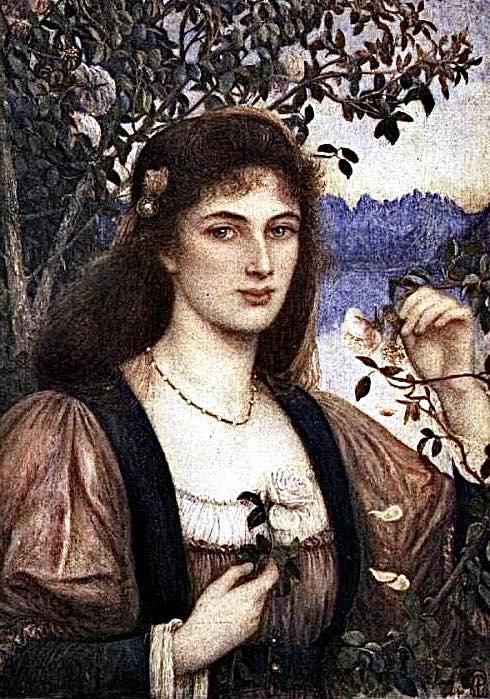
THE ARMIDA TRILOGY | Daughters of the Dance – Book One (2018),
Choir of Cloistered Canaries – Book Two (2020), and
Even a Crow Knows How to Crack a Walnut in Clear Light – Book Three (2026)
The Armida Trilogy — A Multigenerational Odyssey of Feminine Power
The fictional works of The Armida* Trilogy are all interconnected by the central theme of women’s issues in the midst of adversities across various historical contexts. The narratives feature protagonists from different generations, with the first novel focusing on three women, the second on two, and the third on a single individual.
These works blend elements of intellectual discourse, philosophy, intrigue, symbolism, history, travel, and romance, incorporating some brief aspects of literary nonfiction. Each novel conveys messages about determined women navigating their spiritual journeys within specific historical frameworks and with their development influenced by contemporary events. The Armida Trilogy spans from the turn of the 19th century to the early 21st century and introduces central protagonists Dara, Ayana, Nona, Isobel, Leitis, Thelma, Myra, and Ana as they play out their archetypes as Creatrix, Lover, Maiden, Mother, Mystic, Warrior, and the like.
Spanning over two centuries, The Armida Trilogy is a sweeping literary journey that interlaces the lives of at least nine women across three novels, each navigating the crucible of her era. From the twilight of the Enlightenment to the dawn of the digital age, these embody timeless archetypes such as the Creatrix, the Lover, the Mystic, and the Warrior. Their stories unfold against the backdrop of historical upheaval, philosophical awakening, and intimate personal reckonings.
Each novel narrows its focus: the first weaves the lives of three women into a collective chorus of resistance and awakening; the second deepens into the duality of two intertwined fates; the final novel distills the journey into the singular voice of a woman confronting the legacy of those before her. Through intellectual discourse, symbolic motifs, and romantic undercurrents, the trilogy explores how women shape — and are shaped by — the world around them.
Blending fiction with glimmers of literary nonfiction, The Armida Trilogy is not just only a chronicle of survival but also a celebration of spiritual evolution, intergenerational wisdom, and the enduring power of the feminine spirit.
Though the trilogy uses the author’s birth name per se, The Armida Trilogy, is named after a fictitious character, Armida, in Torquato Tasso’s epic poem, Gerusalemme Liberata (1591). with historical and literary connections: A Damascus warrior-queen from the 1st Crusade. Tasso inspired numerous artists and composers, each interpreting Armida’s character in unique ways. As such, she embodies the archetype of the forsaken woman in literature. Yet, many view Armida as a more relatable and sympathetic figure, adding depth to her portrayal.
BOOK THREE – Even a Crow Knows How to Crack a Walnut in Clear Light. (2026)
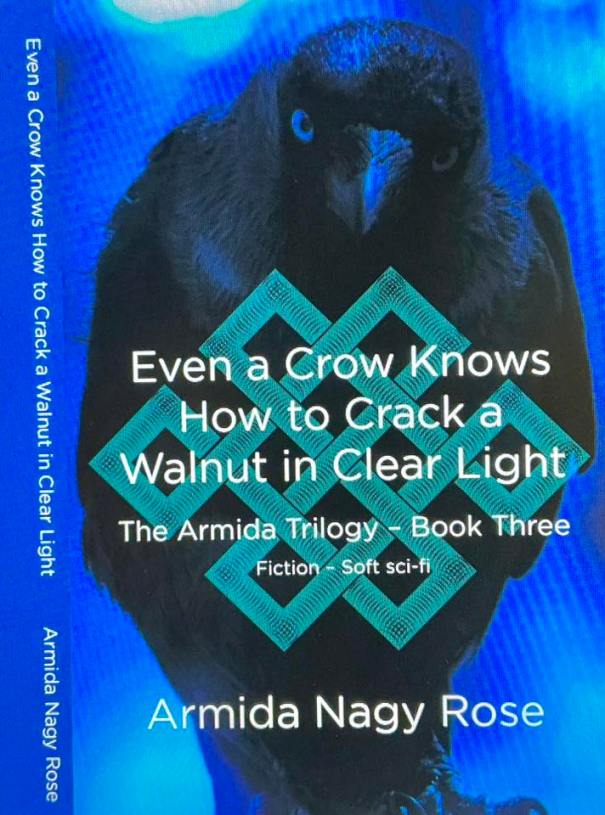
Despite its playful title, Even a Crow Knows… introduces a gifted M.I.T. graduate, whose life sets the foundation for the novel’s exploration of the clash between technology and spirituality. It touches on her early childhood, when her natural brilliance and curiosity about the universe first began to take shape.
The narrative introduces the overarching conflict—Ana’s recruitment by a corporate headhunter for an orthodox, visionary consortium focused on reshaping the world with her military research experience at Area 51. And Ana’s scientific fascination eventually merges with deeper philosophical questions about the nature of existence.
The background themes of the novel include elements of military research, philosophy, intrigue, symbolism, history, and romance, incorporating literary nonfiction. Ana’s growing realization of a spiritual truth—when death is perceived as an illusion and where all beings and constructs are interconnected in the vast expanse of space— one can reach self-liberation. After all, the subtitle states Space Contains All Beings and Things.
BOOK ONE – Daughters of the Dance (2018)
Aa multi-generational saga of women dancers, specifically the danse du ventre, against a backdrop of global upheaval within the context of the Sephardic-Ladino community of professional men of Curaçao, this historical novel is rich in its cultural tapestry, spiritual symbolism, and mature sexual boundaries. At once, it’s a historical epic, spiritual journey, and intimate portrait of female embodiment.

Renewed interest in Daughters of the Dance, the first book under The Armida Trilogy, this press release offers an overview of Armida Nagy Rose’s historical novel originally published in August 2, 2018. Originally written as a screenplay, Nagy Rose later expanded it into this novel to incorporate richer historical and cultural detail of the Sephardic Jews of Curacao…
Set across the first half of the 20th century, the noel spans three generations of women in two interconnected families—mothers, daughters, and granddaughters—who practice the art of dance, specifically danse du ventre (Moyen-Orient), against a backdrop of global upheaval. The other family involved three affluent Sephardic brothers.
The story revolves around Dara, an Algerian expatriate whose sensuous belly-dancing garners both admiration and scandal in Europe and in the Americas during World War II. Her daughter, Ayana, and later her granddaughter, continue this heritage. Through these spiritual daughters of the dance, the fast-moving narrative explores topics of sexuality, spiritual liberation, and female empowerment
The following provides key themes (historical and cultural tapestry, spiritual symbolism, and controversial adult content).
The plot weaves through settings that include the Netherlands, Panama, Spain, Mexico, and Willemstad, Curacao—all within the context of the Sephardic-Ladino Jewish diaspora and the expansions and tremors of war.
Moreover, dance in the novel is not just performance. It is a spiritual discipline to “dance in the middle of the fighting, dance in your blood, dance when you are perfectly free,” a partial quote of a Sufi poem by Rumi (13th century C.E.). As a theme, the narrative connects dance with themes of redemption, freeing of the self, and breaking cycles of rebirth (the cycle of samsara), weaving in Buddhist notions like the Bardo (the intermediate state of death and rebirth).
Consequently, the novel delves into mature themes—sexual boundaries, relational power, religious conservatism, and suppression of women—providing both a sensual and cerebral experience.
Daughters of the Dance thought-provoking themes around female agency, sexuality, and liberation is both sensual and symbolic storytelling.
In essence, this historical novel is an ambitious, provocative sage of women seeking their agency—literally through dance, spiritual ecstasy, and introspection—amid social, religious, and wartime constraints. In short, it is at once a historical epic and an intimate portrait of female embodiment.
BOOK TWO – Choir of Cloistered Canaries (2020) – a thought-provoking, multi-layered novel that fuses epidemiology and psychology with ancient symbolism, environmental activism, and mystical exploration – wrapped in an emotionally-grounded take of reconnection, love, and resistance against ethical erosion. It uses the canary as metaphor to champion environmental guardianship and justice for all.

Anyone who is interested environmental justice when science meets spirituality would be attracted to the environmental appeal and intellectual adventure.
Leitis Dennett, a senior CDC epidemiologist about to retire, is called to a secretive laboratory at the North Carolina Research Campus to reconnect with her estranged mother of several decades. As a member of the CDC Rapid Response Team, her visit to her mother is cut short to join the team headed for The Vatican and Rome, Italy. It is there that a fortuitous relationship with Pope Hormisdas II develops.
Anyone who is interested environmental justice when science meets spirituality would be attracted to the environmental appeal and intellectual adventure.
Leitis Dennett, a senior CDC epidemiologist about to retire, is called to a secretive laboratory at the North Carolina Research Campus to reconnect with her estranged mother of several decades. As a member of the CDC Rapid Response Team, her visit to her mother is cut short to join the team headed for The Vatican and Rome, Italy. It is there that a fortuitous relationship with Pope Hormisdas II develops.
It is also at this journey that she meets a medical engineer who joins her to further improvements on public health and to combat environmental degradation, echoing President Eisenhower’s warning in 1961 against unchecked industrialization and over consumption.
The novel resonates with modern concerns—clean air, water, and earth—representing “our song as canaries,” a metaphor for how human signal ecological distress. Leitis blends her epidemiology expertise with her passion for comparative mythology and alchemy, searching for hidden meanings in ancient symbols.
Beyond global stakes and politics, the novel is deeply personal—a mother and daughter healing almost a half-century of separation.
If you are drawn to environmental activism, ethical science, and storytelling where ancient wisdom meets modern dilemmas, this novel delivers. Even as a human story, it is framed within larger questions of mortality and stewardship.
In summary, Choir of Cloistered Canaries blends a personal mother-daughter reunion with a global quest to expose and counteract corporate greed, sacred symbolism, and environmental collapse. It asks readers to listen to the Earth’s “canary” warnings.
ABOUT THE AUTHOR – Armida Nagy Rose is a reclusive, multidisciplinary artist and writer who publishes fiction under a nom de plume. Her work moves effortlessly between visual art, poetry, and narrative fiction, fusing spiritual inquiry, cultural history, and embodied practice into stories and workshops that invite close attention and quiet transformation.
Born into a family steeped in diasporic histories and contemporary religious beliefs, she developed an early fascination with myth, movement, and the material traces of memory. Her visual work—acrylics, watercolors, and pen-and-ink drawings—earned regional recognition when she was named Artist of the Month by the North of Tampa Arts League in the early 2000s. She also served on the board of the Coalition of Hispanic Artists in Hillsborough County, organizing community exhibitions that paired archival research with contemporary visual experiments.
As an educator, Armida created Zen Tango Art: Meditative Drawing in Pen & Ink, a practical manual published in 2011 that pairs intuitive mark-making (doodling) with focused observation (negotiating a representational object with doodling aesthetics) and contemplative attention. She led workshops that translate the book’s techniques into accessible exercises for artists, writers, and people seeking art as a mindfulness practice.
Her literary output spans poetry, short prose, and longer fiction. Early poems such as “Abraham Revisited” and visual pieces appear in anthologies such as Waves of Wonder and Reflections: The Olli-USF 20th Anniversary Collection, where she contributed both prose and imagery. Several early essays and art pieces were published online between 2012 and 2013. The International Library of Poetry, 2002, “Ode to the Gaian Pie”. Some of her early writings (2012-2013) are posted at thought4though.wordpress.com.
She has also taught introductory “Quintessential Tibetan Buddhism” at the Osher Lifelong Learning Institute at the University of South Florida. Working from an initial screenplay for Daughters of the Dance, having trained in belly dance for several years, she expanded her narrative vision into The Armida Trilogy, a multi‑generational sequence of novels that interweaves history, comparative mythology, and spiritual symbolism to examine women’s agency across three centuries.
Armida’s fiction is characterized by richly textured settings, ethically engaged protagonists, and an interest in the body as archive and ritual. Her first novel, Daughters of the Dance, reframes the danse du ventre as spiritual discipline and a cultural memory within Sephardic‑Ladino networks. Book Two, Choir of Cloistered Canaries, blends epidemiology, environmental activism, and mysticism to ask how science and spirituality might together defend the commons.
Despite her private nature, Armida has participated in public life through curated lectures, intimate salons, and virtual conversations that pair historical scholarship with embodied practice until she became afflicted by multiple chemical sensitivities (MCS). Since 2009, she became an advocate of living a life that reduces exposure to toxic chemicals, primarily, those that are derived from petroleum. The novel, Choir of Cloistered Canaries, broaches this theme in a limited manner, since ambient and indoor air pollution is a major cause of premature deaths worldwide..
Armida lives and works in the southeastern United States. She continues to paint, draw, and write into her eighties and has developed a new fiction that explores the intersections of ritual, ecology, and female creative power.


 Armida Nagy Rose Author