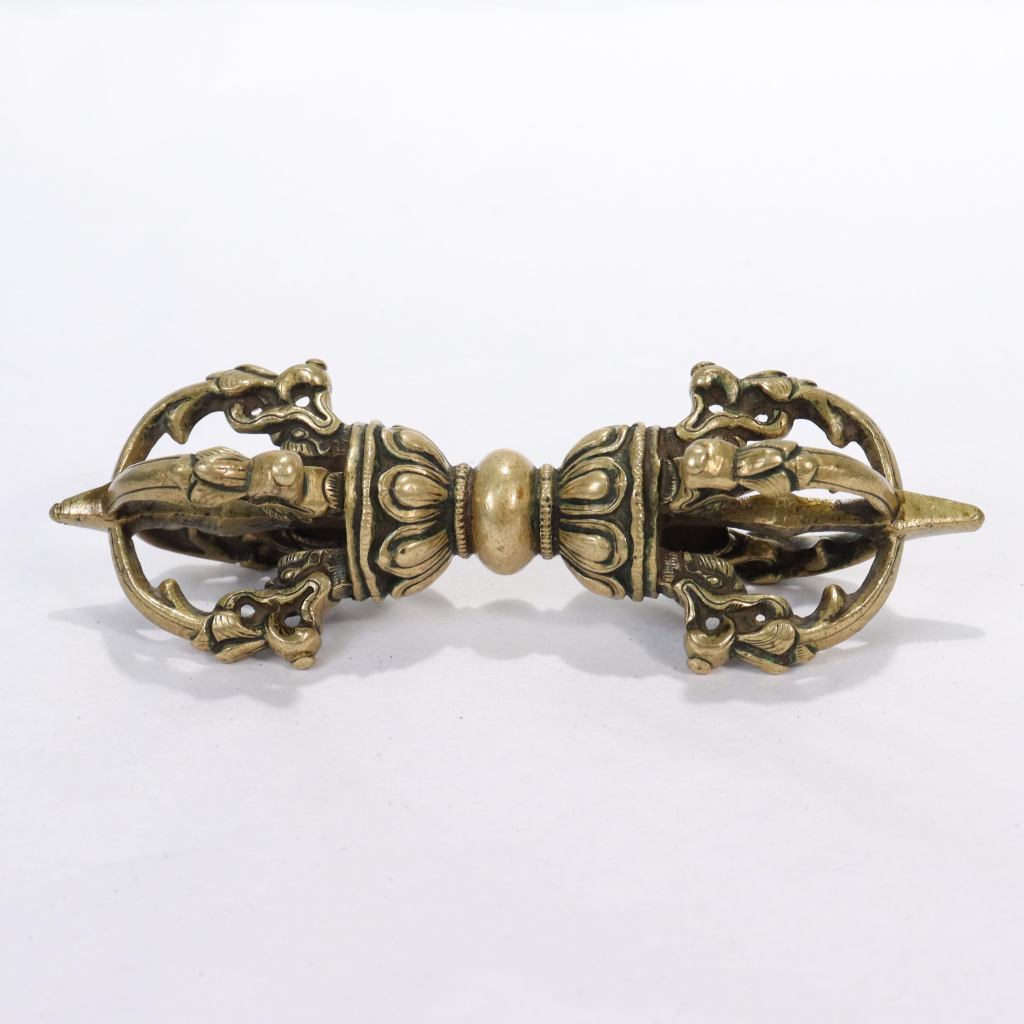
A global social media sector knows about Elon Musk’s “vajra” on his bedside table. Is it still placed there? Has he made the vajra world famous? What is a vajra and why would Elon Musk be interested in it?
Here is a clue: The vajra is still a mystery to both physicists and engineers. Musk holds a Bachelor of Science in Physics and holds the title of Chief Engineer at Space X without having a need for a degree in engineering. Also, some folks believe that the ancients held hidden knowledge and wisdom we contemporaries lack.
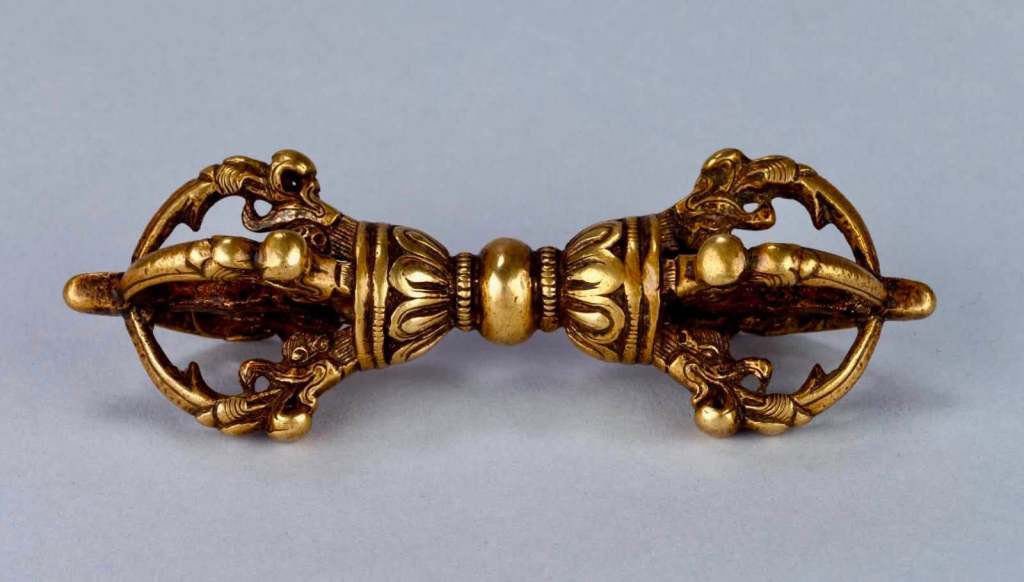
In late November 2022, Elon Musk posted a photo of his chaotic bedside table on Twitter, showing a mix of stuff. Among the stuff was a bronze vajra—a symbolic ritual object from Tibetan Buddhism. It is called a dorje in Tibetan. As a ritual object, it is central to the Vajrayana—or tantric (esoteric)—Buddhism. When used in ritual practice, it becomes a display of symbolic awakening. Moreover, a powerful vajra would contain more copper than bronze (an alloy made by combining copper and tin). Copper is a pure elemental metal while bronze is an alloy that is made by combining copper and tin, phosphorus, or aluminum. As an elemental metal (Cu), copper has high electrical and thermal conductivity for superior strength, hardness and wear resistance.
The vajra is usually paired with a ritual bell (Tib., drilbu). This point matters, which is disclosed in the text below.
What the Vajra Is and is Not
The vajra is an important instrument to the ancients who described the ineffable [god] in most cultures. But in the culture that developed the language of Sanskrit, vajra means both “thunderbolt” and “diamond.” It is linked to Indra, the thunderbolt-wielding deity of the gods in Hindu-Vedic mythology, and in Buddhist tradition to Śakra. However, our minds tend to reify such phenomena as Indra, Vishnu, Shiva, and the like. In other words, these ancient deities represent different states of awareness since our cognitions are a dance between veiling and unveiling (“the dance of Shiva”). Unfortunately, it was the lesser intelligent beings who reified them, not understanding that they, as these deities, have the whole universe contained within them as well. These ancients understood the reality of the nature of mind as mind consciousness, which occurs recursively at all scales and times.
During the Early Vedic Period (c. 1500–1000 BCE), the mythological counterpart of Indra evolved from other Vedic deities into the Trimurti of Brahma, Vishnu, and Shiva. There was a broader shift in the pantheon over time, but the deities were the same suspects. Indra was the god of thunder, lightning, rain, and storms (thus, the affiliation with “thunderbolt-wielding” strength). The diamond aspect has at least two meanings–its durable hardness to be able to cut through things, and forms under extreme heat (over 2000 degrees Fahrenheit) and high pressure that squeezes carbon atoms into tights crystal shapes.
Indra was often paired with Mitra (god of friendship and harmony), forming the dual deity Mitra–Indra. Other Vedic gods like symbolizing fire, cosmic order, and sacred drink were also central (especially when Zoroastrianism was founded; but Indra stood out as the most powerful and popular until the rise of the Upanishadic and Early Puranic Periods (c. 800–300 BCE onward). Indra’s role as a warrior and storm god diminished, and he was gradually replaced by more abstract and philosophical concepts like Brahman and Atman. Eventually, Indra’s image became more humanized—sometimes portrayed as proud, flawed, or even lustful—while Vishnu emerged as the preserver, Shiva as the destroyer, and Brahma as the creator. Also, it was Shiva who absorbed aspect of Indra’s storm and destruction; and the Vajra became associated with Shiva’s weapon. It is only symbolic and not to be objectified.
Musk’s Frame of Reference on the Vajra
Whether or not Musk has some private religious belief or is an agnostic or an atheist is immaterial. However, his remarks on the Vajra, when it became a social media thing, simply replied, “This is the Vajra (Dorje). This device goes back to over 30,000 years from the Vedic and Sumerian cultures. Model of a ‘free energy’ [lightning] device from the gods”. He did not even offer to explain away why it was on his bedside table. Nevertheless, Musk’s interest is in the vajra representing “free energy”. Wouldn’t he not want to tap into that “free energy”?
In Chapter 20 of Even a Crow Knows How to Crack a Walnut in Clear Light, the main protagonist and lead MIT physicist at an experimental station in Chile is also intrigued by the vajra. Even though she knows its spiritual implications as a Buddhist practitioner, she still asked herself, Does the vajra represent something internal or external or both?… In her journey, she does question the power of a physical vajra. Even the novel is dedicated to it. In short, the “story” of a ritual object is shared as a broader cultural conversation about religion, symbolism, and the intersection of spirituality and technology.
Why It Matters
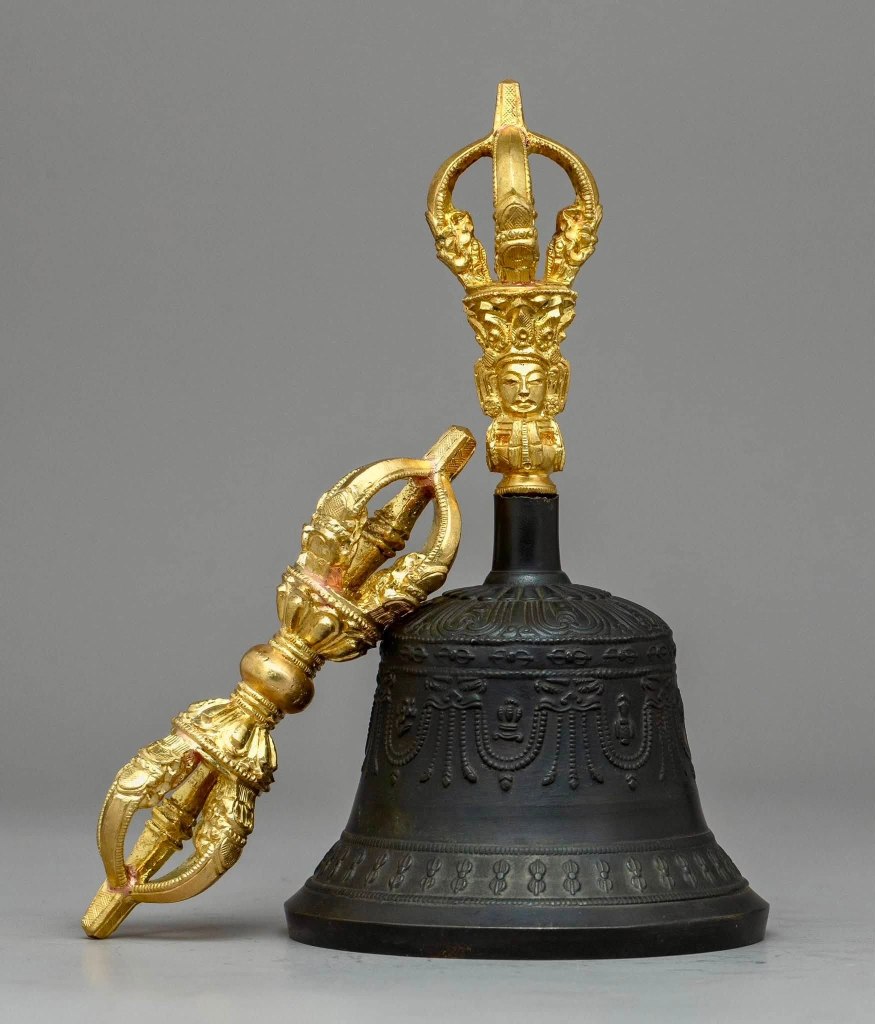

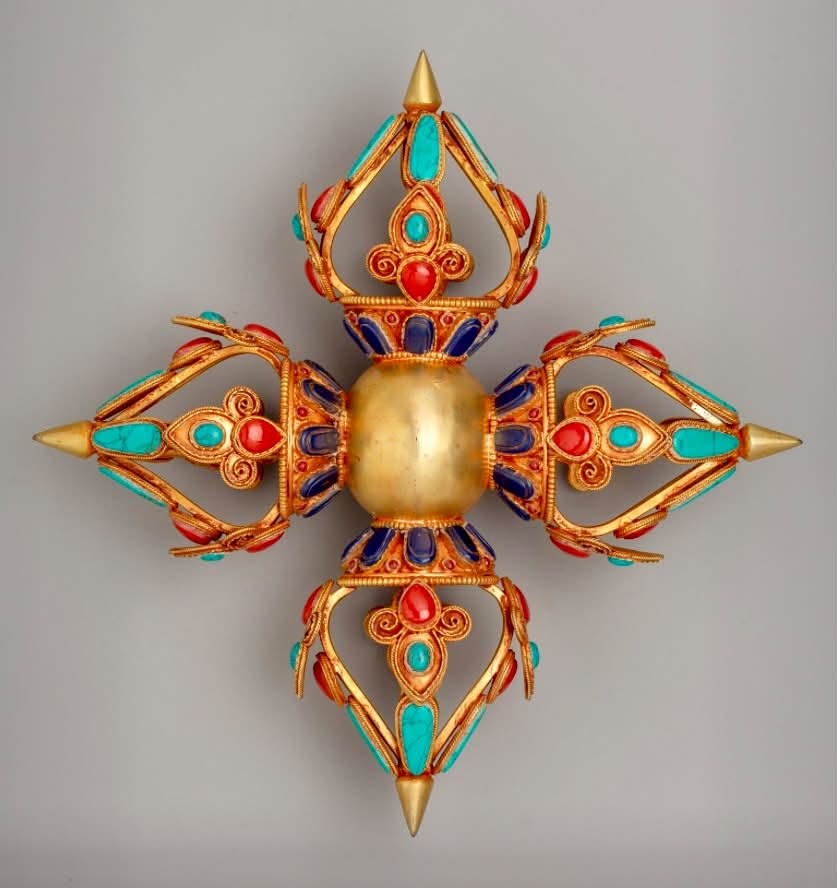

Because the Vajra is still in use as a spiritual symbol, having mythological roots and of interest and as having some technological significance in our world of quanta, In Even a Crow Knows How, the technological properties are explored as fiction. Nevertheless, in Tibetan Buddhism, the Vajra represents something that takes into consideration why the ritual Vajra and the ritual bell co-exist. As the phrase goes, “there is no Shiva without Shakti” (i.e., “pure, silent consciousness cannot act or manifest without active energy” (better yet, “without Shakti, Shiva is inert; without Shiva, Shakti has no direction”). Using the metaphor of a corpse, “without Shakti (energy), Shiva becomes Shava (lifeless and inactive).” The two forces are not separate entities; they are inseparable.
When it comes to the realm of consciousness and energy, Vajra is the unchanging soul or witness while Shakti is the active force that creates and moves the universe. Here is where the Buddhist practice comes into play:
As a Vajrayana Buddhist symbol, it is a method referred to as “compassionate action,” “skillful means,” and “the active effort to benefit all beings.” It has indestructible powers–wisdom (the final being all-pervasive wisdom), and awakening that cannot be destroyed by confusion or hardship. It has penetrating power in that it cuts (like a diamond) through ignorance (e.g., distraction), attachment, and mistaken views of reality. Finally, it forms a unity that is known as the inseparability of compassionate activity and insight into reality.
In practice, the yogin/yogini hold the vajra in the right hand and the ritual bell in the left. It can be used in gestures, visualizations, initiations, chants, and meditation practices. It is never used as a physical weapon. When viewed as a “weapon,” it serves as an imaginary gesture to conquer inner obstacles (e.g., pride, anger, craving, and the like) but never to attack a perceived enemy. Together, the vajra and bell express a core Vajrayana principle: compassionate action to be joined with wisdom.
In essence, the vajra is a compact visual teaching of having a stable, diamond-like awakening and of having the power to transform confusion into the awakened mind-consciousness. The ultimate result: all-encompassing wisdom. Often referred to as the wisdom of the absolute space of reality (Tib., dharmadhatu wisdom), the all-encompassing wisdom is “the boundless, non-discriminating awareness that perceives the fundamental equality and interconnectedness of all things.”
E MA HO [how amazing]