Thoughts Beyond The Armida Trilogy–Symbols Matter .01

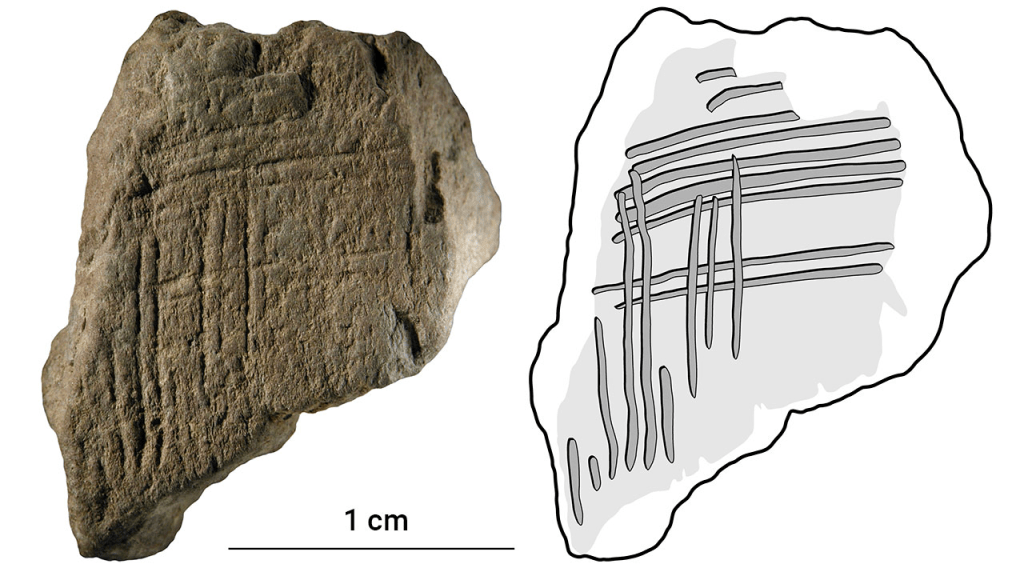
An early human scratched this hashtag pattern into a red ochre stone at Blombos Cave in South Africa. It is estimated to be about 100,000 years old. Source: Science.org

Can you imagine the first symbol a hominid made about 100,000 years ago? It appears to have been a hashtag? What could it have been like for him or her to make the first downward line on a hard surface? It was generated more than likely by a thought that then became a symbol.  Maybe it was to say, “This is one, this one is two,” ad infinitum. The curve, then the circle, followed by a spiral? In each case, each marking was a symbol to generate a mark.

So, what is symbol? A mark, sign, or word that represents an idea, object, color, relationship, or answer. Symbols as allegories are interesting. Every plot element in an allegory represents something in the story. For example, in Plato’s “Allegory of the Cave,” everything in the cave is an allegory—from the cave to the people, fire, shadows, and chains. Plato explained the allegory by saying that “Those who are able to see beyond the shadows and lies of their culture will never be understood, let alone believed by the masses.” He speaks to the ignorance of humanity trapped in the conventional ethics formed by society. 

In Buddhism, the cave is a metaphor used to illustrate the illusory nature of the material world.  The cave represents the human condition where individuals are trapped in a limited perception of reality.  The shadows cast on the cave wall represent the material world, which is a reflection of deeper truths that can only be understood through philosophical inquiry and enlightenment.

Albeit related to symbolism, a metaphor compares two seemingly unrelated things, stating that one thing is another. In the Armida Trilogy, there are several such metaphors; however, the three novels are laden with symbolism. In fact, each chapter of two of the books is introduced with a symbol. And, Book II offers a chart of the symbols as used in Choir of Cloistered Canaries.

 In the first chapter of Daughters of the Dance, long hair becomes a symbol of the first character—her long hair is likened to her headdress.  It was, in biblical times, a way of identifying an individual’s social status and cultural identity. For women in biblical times, long hair was associated with femininity, beauty, modesty, and submission to a higher authority (both the husband and God).

In Choir of Cloistered Canaries, water as a healing element is present to symbolize life and vitality, purity and renewal, emotional depth, spiritual significance, and cultural importance.  In case we forget, the average percentage of water in the human body is roughly 60%. The percentage range of water varies slightly, usually within a 50 to 75 percent range. Water, moreover, has many uses in chemical processes as a working fluid to convert heat energy to mechanical energy. There is historical reference as to how a historical woman, Maria Hebraea (c. 300 C.E.) who invented several kinds of chemical apparatus such as the bain-marie. She made distillation a new invention. Carl Jung used Maria’s axiom—“One becomes two, two becomes three, and out of the third comes s the one as the fourth”—as a metaphor for wholeness and individuation.  Afterall, Maria was known for her alchemy, the first known Western alchemist.

There is another analogy to Choir of Cloistered Canaries that is embedded in the title:  “Cloistered,” synonymous with “caged.” In Buddhism, the cage refers to the idea that the mind and body are like a bird in a cage. The bird sees that it is not able to fly freely, thus the metaphor illustrates a sense of disenchantment and the desire for liberation from suffering. Unlike our current environment where we have to put up and shut up, it becomes difficult to recognize that there is a way out of the cage.  Book Three addresses this conundrum or challenge.

The third book, Even a Crow Knows How to Crack a Walnut in Clear Light, uses the Star of David to highlight the lost memory of two acute angle triangles, one inverted over the other (the Mazzorath). It reflects an origin from the Vedic and Upanishadic India around the first half of the first millennium B.C.E. In early Indian thought, the two halves (or acute angle triangles described the primordial Self split into two parts (male and female). Later, the Yin-Yang concepts in Taoism came about as early as the 14th-13th century B.C.E.  The Yin represents moon energy associated with reflection, inner awareness, and sensitivity; the Yang represents the sun energy associated with activity, dynamism, and vitality. This lays the foundation of Ana and her mother to find agency in a world still governed by male conventions in the 21st century. Thus, the Armida Trilogy reflects the struggle of women as the setting and finally a resolution to the challenge of being human and feminine.

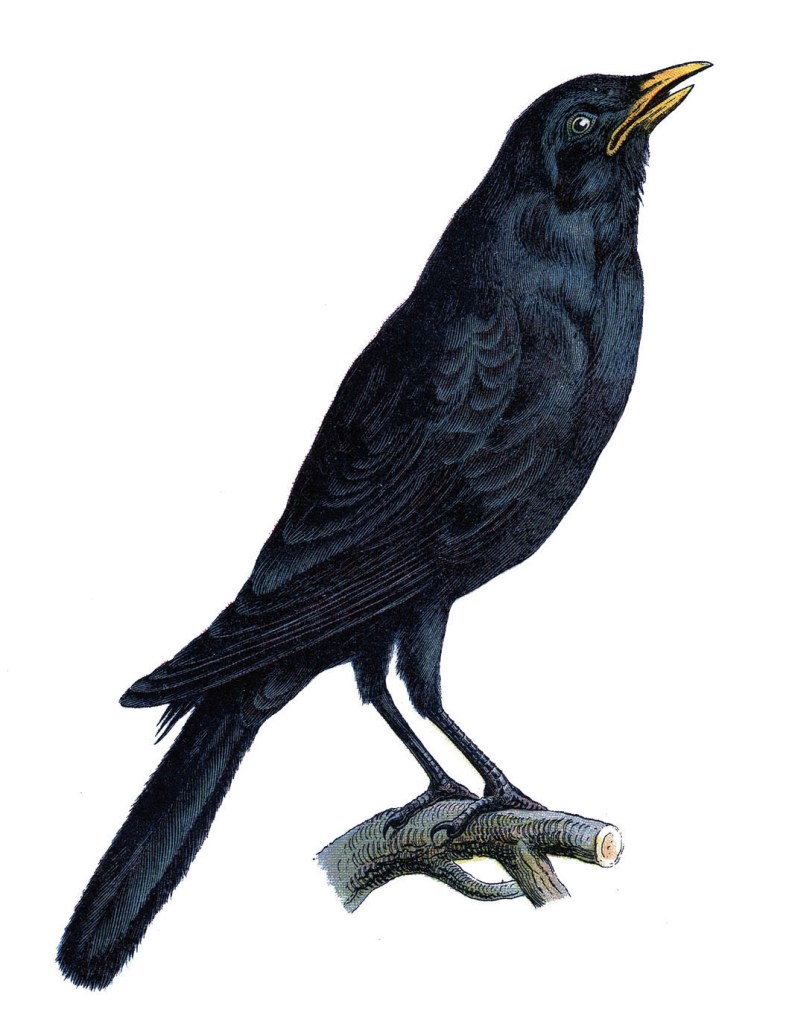
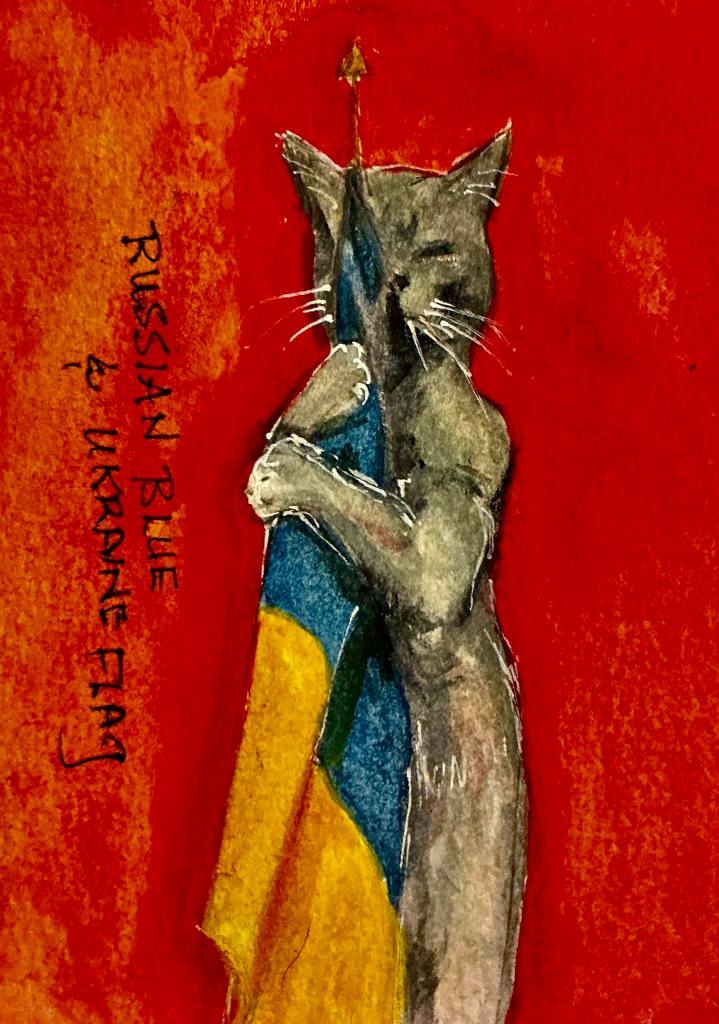
As a mental exercise on current events, how would you view what the following gallery of images portrays? What do they symbolize?

Thoughts Beyond Even a Crow Knows…, Ana’s Life Unfolding

Ana’s Obsession

The main protagonist, Ana Tabbot, was obsessed with the properties of light since her early childhood and throughout her existence, especially by gaining more knowledge about light from her physics studies at MIT and later in pursuit of the light body discussed in ancient texts. 

While the novel Even a Crow Knows How to Crack a Walnut in Clear Light renders a simplistic explanation of Ana’s experiences, this blog discusses something fascinating about light, which renders another interpretation of when Jesus appeared before the temple courts at Jerusalem’s during the Feast of Tabernacles, a significant Jewish festival associated with light. In Jewish mysticism (Kabbalah), the Feast of Tabernacles (Sukkot) symbolizes the spiritual journey of the soul or Self and the anticipation of “ultimate presence,” acknowledging the temporary nature of the material world that also includes the anatomical body of all beings and things.

As written in the Gospel of Matthew, to the gathering of celebrants at the temple courts, Jesus said that, “I am the light of the world” while he also admonished them that they, too, “are the light of the world” and to “let [their] light shine before others.”  His declarations are interpreted literally to this very day.

This blog will be the first of several on how to interpret “light is us” or “we are light.”  First of all, here is a review of how “light” was referenced in ancient texts: (1) In the Upanishads, “Light in the heart,” “light of lights.”  (2) In the Bhagavad Gita, “Light in all beings.” (3) In the Mahayana Sutras and treatise of Buddhism, “luminous mind.”  (4) In the alchemy treatises of Taoism, “Spirit’s brightness.” (5) In Zoroastrianism, “wisdom, goodness, and eternal presence of the Lord of Creation, (6) In the Gospel of Thomas and the Pistis Sophia of Gnosticism, “light within,” “spark of consciousness.” (7) In Sufism (Islamic mysticism), “Light of Lights,” the actual inner illumination that transforms the heart, mind, and soul (Self) of the seeker, acknowledging that “all existence is a manifestation of Divine Light and everything reflects it in varying degrees.”

And in the Higher Tantras of Tibetan Buddhism, light has several defined aspects—”innate purity and luminosity of mind” (for example, physical electromagnetic energy); “non-conceptual, “beyond senses” (for example, sensory phenomenon);

a metaphor for  “awareness and knowing” (for example, means to see objects); “spontaneous, unconditional timeless presence” (for example, beyond conditioned, time-bound reality; nonduality); and “direct experience” (accessed through wisdom seeing). In essence, “light” or “clear light” is a poetic term for the direct, pure, luminous essence of mind and awareness, recognizing the ultimate reality by being liberated from all conceptual and sensory overlays.

In all of these texts, “light” is used as a metaphor for consciousness and for understanding the mystery and illumination of awareness.

o0o

The Science

For the first time, scientists have observed quantum communications of light within us that drive DNA replication. Life is driven by light and frequency.  Homo sapiens sapiens are not excluded from this reality. 

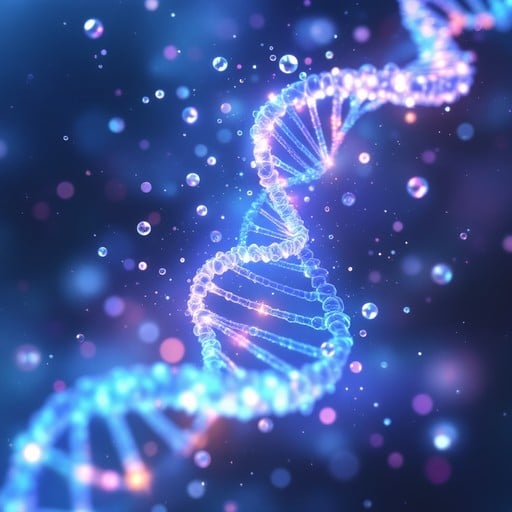
In his research, German biophysicist Fritz Albert Popp demonstrated that every living cell emits a ultra-weak, coherent stream of particles called a biophoton field, the central source of light. The biophotons form a system of colored electromagnetic energies that regulate metabolic processes.  It is a light that is beyond basic photosynthesis. The master conductor of the cellular orchestra is the DNA molecule, which constantly absorbs and emits light.

It is a high-speed communication network that governs all the metabolic processes of the body and that makes for a healthy body or a diseased body. The healthy body results for a harmonious laser-like biophoton field whereas the light of the diseased body is scattered and chaotic.

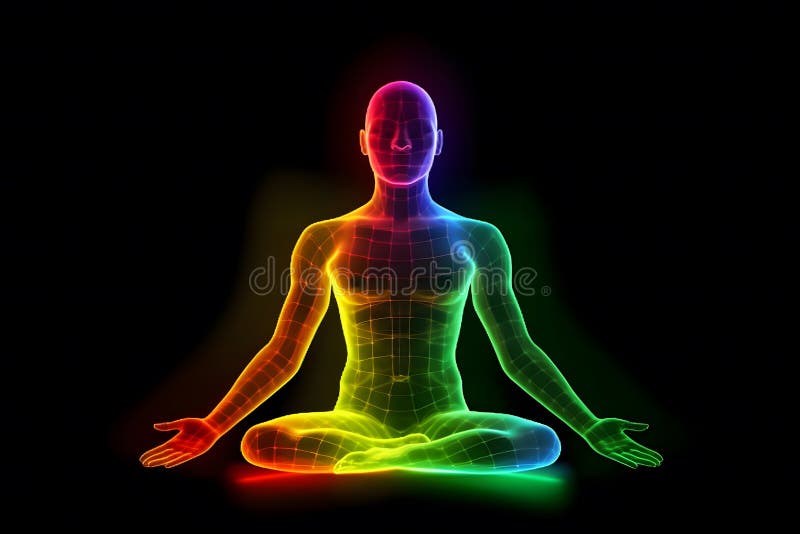
It may go without saying that this translates into the physical reality behind the spiritual concept of healing and of the light body.  One’s quality and condition through conscious living increases the coherent and intensity of the light that emanates from one’s genes. He said, “We know today that [we], essentially, [we are beings] of light,” thus shedding light on philosophical and scientific implications of light as defining the nature of all living organisms and future understanding of how the cellular functions relate to consciousness.

Basically, DNA molecules emit biophotons that form an information field inside and around cells, thus acting like routers that distribute signals in transferring essential information for regulating biochemical reactions, cell cycle control, cellular metabolism, and tissue organization. Moreover, biophotons are involved in the communication pathways in the plant and animal kingdoms., including neural signaling.  Thus, a light body is possible under the right circumstances, conditions,  and abilities.

o0o

Philosophical Implications

Philosophical implications were discussed earlier; however, this blog is merely introductory to the modern science of the many properties of light. For example, the properties of light include the following:

  • Its wave-like nature (wavelength, frequence, and polarization
  • Its particle-like nature (photons)
  • Its constant speed in a vacuum (approximately 300,00km/s)
  • Its ability to interact with matter (through reflection, absorption, transmission, refraction, dispersion, diffraction, and scattering)
  • Its electromagnetic nature (radiation, composed of oscillating electric and magnetic fields that propagate through space)

“Form is emptiness, emptiness is form”

Physicist David Bohn, described matter as “condensed or frozen light” (i.e., matter as “frozen light) trapped into patterns that move slower than the speed of light.  He concluded, “We are frozen light.” The spiritual implications of acquiring a Body Light is reserved for a later blog.  As Siddhartha Shakyamuni inferred earlier than Albert Einstein’s E = mc2, energy [light] and mass are interchangeable.   Siddhartha Gautama said, “Form is emptiness, emptiness is form.” “Emptiness” is just another way of saying that “form” is absent of inherent, independent existence in all phenomena. Emptiness, in this case, is neither nothingness nor void.

Energy cannot be created or destroyed. It can only be changed from one form to another.—
Albert Einstein