
Ana’s Obsession
The main protagonist, Ana Tabbot, was obsessed with the properties of light since her early childhood and throughout her existence, especially by gaining more knowledge about light from her physics studies at MIT and later in pursuit of the light body discussed in ancient texts.
While the novel Even a Crow Knows How to Crack a Walnut in Clear Light renders a simplistic explanation of Ana’s experiences, this blog discusses something fascinating about light, which renders another interpretation of when Jesus appeared before the temple courts at Jerusalem’s during the Feast of Tabernacles, a significant Jewish festival associated with light. In Jewish mysticism (Kabbalah), the Feast of Tabernacles (Sukkot) symbolizes the spiritual journey of the soul or Self and the anticipation of “ultimate presence,” acknowledging the temporary nature of the material world that also includes the anatomical body of all beings and things.
As written in the Gospel of Matthew, to the gathering of celebrants at the temple courts, Jesus said that, “I am the light of the world” while he also admonished them that they, too, “are the light of the world” and to “let [their] light shine before others.” His declarations are interpreted literally to this very day.
This blog will be the first of several on how to interpret “light is us” or “we are light.” First of all, here is a review of how “light” was referenced in ancient texts: (1) In the Upanishads, “Light in the heart,” “light of lights.” (2) In the Bhagavad Gita, “Light in all beings.” (3) In the Mahayana Sutras and treatise of Buddhism, “luminous mind.” (4) In the alchemy treatises of Taoism, “Spirit’s brightness.” (5) In Zoroastrianism, “wisdom, goodness, and eternal presence of the Lord of Creation, (6) In the Gospel of Thomas and the Pistis Sophia of Gnosticism, “light within,” “spark of consciousness.” (7) In Sufism (Islamic mysticism), “Light of Lights,” the actual inner illumination that transforms the heart, mind, and soul (Self) of the seeker, acknowledging that “all existence is a manifestation of Divine Light and everything reflects it in varying degrees.”
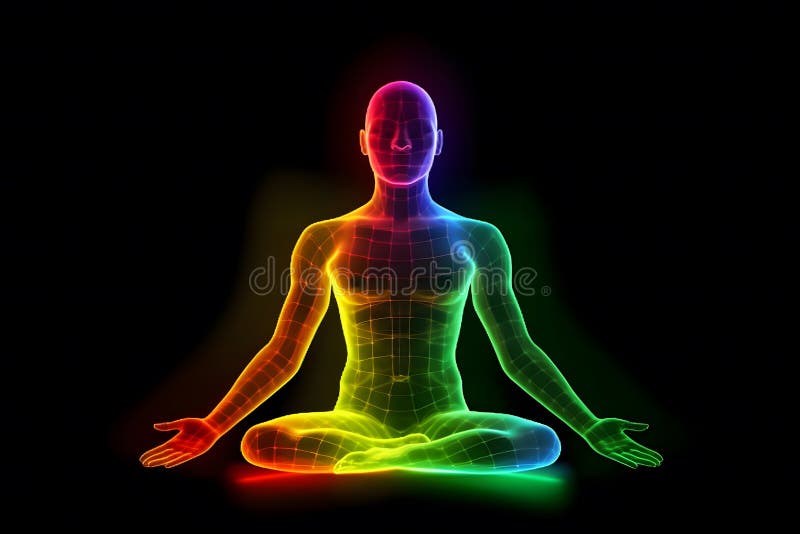
And in the Higher Tantras of Tibetan Buddhism, light has several defined aspects—”innate purity and luminosity of mind” (for example, physical electromagnetic energy); “non-conceptual, “beyond senses” (for example, sensory phenomenon);
a metaphor for “awareness and knowing” (for example, means to see objects); “spontaneous, unconditional timeless presence” (for example, beyond conditioned, time-bound reality; nonduality); and “direct experience” (accessed through wisdom seeing). In essence, “light” or “clear light” is a poetic term for the direct, pure, luminous essence of mind and awareness, recognizing the ultimate reality by being liberated from all conceptual and sensory overlays.
In all of these texts, “light” is used as a metaphor for consciousness and for understanding the mystery and illumination of awareness.
o0o
The Science
For the first time, scientists have observed quantum communications of light within us that drive DNA replication. Life is driven by light and frequency. Homo sapiens sapiens are not excluded from this reality.
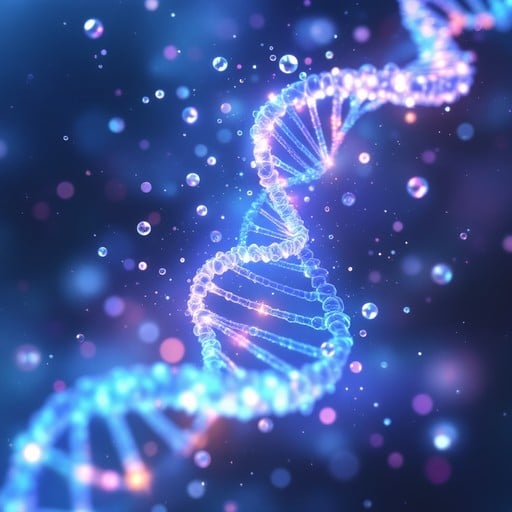
In his research, German biophysicist Fritz Albert Popp demonstrated that every living cell emits a ultra-weak, coherent stream of particles called a biophoton field, the central source of light. The biophotons form a system of colored electromagnetic energies that regulate metabolic processes. It is a light that is beyond basic photosynthesis. The master conductor of the cellular orchestra is the DNA molecule, which constantly absorbs and emits light.
It is a high-speed communication network that governs all the metabolic processes of the body and that makes for a healthy body or a diseased body. The healthy body results for a harmonious laser-like biophoton field whereas the light of the diseased body is scattered and chaotic.
It may go without saying that this translates into the physical reality behind the spiritual concept of healing and of the light body. One’s quality and condition through conscious living increases the coherent and intensity of the light that emanates from one’s genes. He said, “We know today that [we], essentially, [we are beings] of light,” thus shedding light on philosophical and scientific implications of light as defining the nature of all living organisms and future understanding of how the cellular functions relate to consciousness.

Basically, DNA molecules emit biophotons that form an information field inside and around cells, thus acting like routers that distribute signals in transferring essential information for regulating biochemical reactions, cell cycle control, cellular metabolism, and tissue organization. Moreover, biophotons are involved in the communication pathways in the plant and animal kingdoms., including neural signaling. Thus, a light body is possible under the right circumstances, conditions, and abilities.
o0o
Philosophical Implications
Philosophical implications were discussed earlier; however, this blog is merely introductory to the modern science of the many properties of light. For example, the properties of light include the following:
- Its wave-like nature (wavelength, frequence, and polarization
- Its particle-like nature (photons)
- Its constant speed in a vacuum (approximately 300,00km/s)
- Its ability to interact with matter (through reflection, absorption, transmission, refraction, dispersion, diffraction, and scattering)
- Its electromagnetic nature (radiation, composed of oscillating electric and magnetic fields that propagate through space)
“Form is emptiness, emptiness is form”

Physicist David Bohn, described matter as “condensed or frozen light” (i.e., matter as “frozen light) trapped into patterns that move slower than the speed of light. He concluded, “We are frozen light.” The spiritual implications of acquiring a Body Light is reserved for a later blog. As Siddhartha Shakyamuni inferred earlier than Albert Einstein’s E = mc2, energy [light] and mass are interchangeable. Siddhartha Gautama said, “Form is emptiness, emptiness is form.” “Emptiness” is just another way of saying that “form” is absent of inherent, independent existence in all phenomena. Emptiness, in this case, is neither nothingness nor void.
Energy cannot be created or destroyed. It can only be changed from one form to another.—
Albert Einstein
 Armida Nagy Rose Author
Thx for sharing Yes that is why it is so important to get out in the light of the sun. They say afternoon sun is the most important.
LikeLiked by 1 person
For sure.
LikeLike