
Characteristic of the author’s novels (The Armida Trilogy), vignettes tend to populate her narratives. Though it is a brief encounter of a gay man helping a sexually abused maiden escape from her master, a gay woman revealing her affection toward a non-lesbian, and a few Two-Spirit beings, the novels include their existence. Regardless of what one’s opinions or beliefs are on homosexual behavior or otherwise, the fact remains several worldwide cultures have recognized that there are more than two sexes or genders.
One of the cultures that explicitly recognizes five sexes are the Indonesian Bugis in South Sulawesi, Indonesia. Generally, these five sexes are customarily defined as follows:
1-2 Cisgender men and women—s person whose gender identity corresponds to their sex assigned at birth.
3 Biological females who take on male roles or “woman-in-man gender”.
4 Biological makes who takes on female roles or “man-in-woman gender.”
5 Androgynous or intersex “eunuchs”. In the Bugis culture, these “eunuchs” are often of the priestly/shamanic classes and are considered to embody all genders or existing beyond gender. This category also includes hermaphrodites and gender fluidity. (Interestingly, the term in Buginese is “bissu.” In Sanskrit, it is “bhiksu.”)
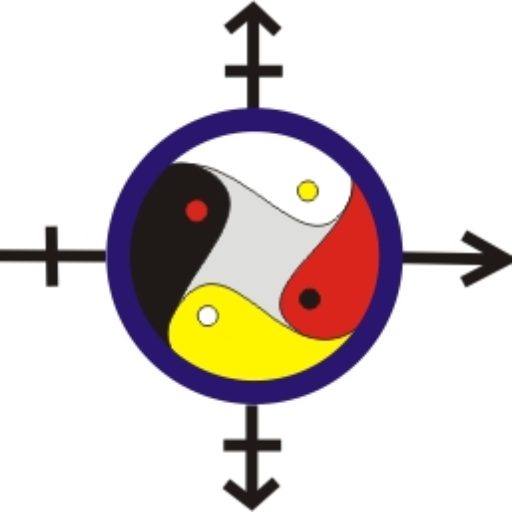
In some Native American cultures, there has more than the two genders (cisgender or not transgender). In some tribal cultures, just three and in others five. One such tribe is the Diné (Navajo). The outlier sexes in Diné have often been described as having Two-Spirit identities. This adaptation understands the importance of bringing harmony to the communities, which usually is of a spiritual nature.
The concept of Two-Spirits refers to individuals who embody both feminine and masculine traits within one individual. These individuals are considered to have a “mixed-gender consciousness.” Such people were recognized and respected in over 150 tribes and held special social and spiritual roles as among the chronicled Bugis of Indonesia.
Basically, the five-gender framework recognizes that those with Two-Spirit inclinations offered sacred gifts and respect to the society at large. They were associated with heightened empathy and unique perspectives. They were often healers, name-givers, matchmakers, artists, insights, and visionaries (not just prophetic). They also could be warriors.
Even Talmudic Judaism (circa 3rd century (based on oral tradition) through 600 CE)) recognizes a six-sex system based on physical and biological characteristics. The sixth sex is split into two, making it seven. The Talmudic sex system is as follows: (1) Male, (2) female, (3) both male and female sexual characteristics, (4) indeterminate or hidden characteristics of male or female that make their gender unclear, (5) a baby assigned as female at birth but who does not develop typical female secondary sexual characteristics and is infertile (aka barren), (6a) a male who is naturally unable to develop typical male secondary sexual characteristics (a natural eunuch from birth), and (6b) a male eunuch due to human intervention (castration). The identification system, however, is more nuanced and segues into the main reason for this article.
Imperial China Eunuchs
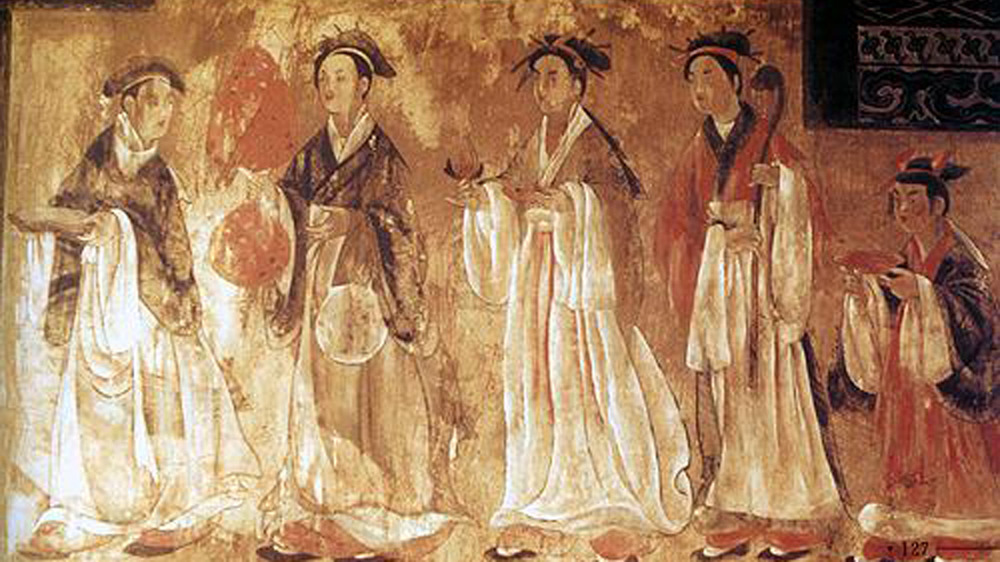
The point of this article is to understand the term “eunuch,” a role that has been around as a group for a long time—as early as 4,000 BCE in imperial China; 2,000 BCE in Sumerian, Egyptian, and Assyrian civilizations, including ancient Greece and Rome, Byzantine Empire, and the Islamic and Ottoman Empires as well as Siam (Thailand) and Southeast Asia. Contrary to common belief, being a eunuch did not always involve castration. Nevertheless, the recognition of being a eunuch from birth, as reflected in ancient texts, has been debated in theology and history to the present. Fascination, ambiguity, and social ambivalence remain in prevailing cultural perceptions. Sadly, “homosexuals” have been viewed as sexually ambiguous or as “other” and often marginalized and persecuted.
With a focus on the New Testament of the Bible, which was written in Greek, and described as the Greek Testament or as the “Word of God,” there is an elaborate description of the “eunuch.” When the Gospel of St. Matthew was written between 50 and 95 CE (due to traditional dating and scholarly disagreement), it was written in Greek for a Hellenic Jewish-Christian audience composed of both Jewish and gentile converts around Antioch in Coele Syria. (The significance of this area was that, be they gentiles or Jews, the messianic followers were finally called “Christians *(Acts 11:26).” Antioch was well established with a strong Jewish identity and synagogues. The gospel, written in narrative style, records how the eunuch of the time was perceived. Whomever the author was, it reflected Jewish legal traditions and teachings. Matthew was one of the twelve apostles of Yehoshua (Greek Iesous), the Messiah, and was known as a tax collector for the Roman Empire.
According to historian Judith Herrin, the earliest Gospel of Matthew, chapter 19, verse 12, regarding eunuchs, reads—
There are some eunuchs, which were born from their mother’s womb; and there are some eunuchs, which were made eunuchs of men; and there be eunuchs, which have made themselves eunuchs for the kingdom of heaven’s sake.
It recognizes the eunuch as a sixth and seventh sex gender, whereas some modern translations contain different or misguiding connotations, such as the following:
For there are different reasons why men cannot marry: some, because they were born that way; others, because men made them that way; and others do not marry for the sake of the Kingdom of heaven. Let him who can accept this teaching do so.” – Good News Translation
There are different reasons why some men cannot marry. Some men were born without the ability to become fathers. Others were made that way later in life by other people. And some men have given up marriage because of the kingdom of heaven. But the person who can marry should accept this teaching about marriage. – New Century Version
Some men are not able to have children because they were born that way. Some have been made that way by other people. Others have made themselves that way in order to serve the kingdom of heaven. The one who can accept living that way should do it. – New International Reader’s Version
There are men who from their birth have been disabled from marriage, others who have been so disabled by men, and others who have disabled themselves for the sake of the Kingdom of Heavens. He who is able to receive this let him receive it. – Weymouth New Testament (Wycliffe uses the term “geldings”.)
This history of eunuchs spans from the fourth millennium BCE to the present. Often eunuchs were considered young men who were castrated to perform certain roles. Historically, however, the category in antiquity was broader and strictly not limited to castration. They were identified as men who lacked sexual desire for women. Thus, those born without a desire for sex with a woman are understood as homosexual. Many eunuchs, however, were able to procreate and some sexually served both men and women. Some blurred the lines of heteronormative expectations. Some held imperial roles as guards or officials while others were ridiculed or excluded. In summary, they were not synonymously homosexual men in a strict sense. However, many are born as such from their mother’s wombs.
It goes without saying that there are nuanced implications to understanding gender diversity beyond the binary model, especially in western societies influenced by colonial times and by the non-holistic worldview of certain Islamic and Christian indoctrinations, which have been based on patriarchal systems and rigid binary gender roles. Such patriarchal norms have even normalized the dehumanization of women, femicide, hyper-sexualization, and subjugation. It also goes without saying that, despite the legacy of gender binaries, there are still persistent legal codes and social attitudes that criminalize and stigmatize non-binary and trans-identities. Such laws and religious perceptions bring about disharmony to a global society when tolerance and harmony among the differences is much needed and desired by a majority.
It is a travesty to enable a society that cannot accept what is natural. This is somewhat similar to preventing women to breast feed in public because it is not a normal process but animalistic.

Recognizing the five genders, not only women’s diverse roles, the roles are tied to the ideals of acceptance and societal harmony. The “stay woke” movement of the 1970s by the Black community through to early 2020s in the United States of America became politically charged in 2025 to criticize anything perceived as progressive became a derogatory term to dismiss or to attack those ideas that encourage an awareness of the social injustice of women, of nonwhite races, of sexism, and of LGBTQ+ rights. Awareness of social injustices is to be WOKE in support of DEI initiatives—diversity, equality, and inclusivity—to accept the natural order of existence.
In summary, if, in fact, there are individuals who fit the definition of a eunuch “born from their mother” or of natural birth, then it would be desirable to accept and to welcome them as genetically normal. But it’s not that simple. Why not continue to strive for a new “New Renaissance” (an American Rebirth) when significant cultural, artistic, intellectual, and technological innovation and renewal be the new paradigm for humanity, blending both old and new wisdom as humanistic values. Humanity cannot survive if the allure is to those who wish to rule by dark psychology with vehemence.
At least, what the human experience of the United States of America needs now is not just to say, “It is time for all good men to come to the aid of the party,” especially when women and LGBTQIA are currently beleaguered. But whose party? Definitely not an anarcho-fascistic party! The People of the United States need an egregore—a combining of enlightened energy, which we all possess, to achieve the true American dream (a government for and by the People to survive) to unite by common goals and beliefs engendered by the living U.S. Constitution. This is true leadership for all.
Let us champion a humane view. After all, even US corporations in the 1990s recognized talents are found across all social groups, not just among a favored few.
For a biological explanation of why “homo sapiens sapiens” are not just cisgender female and male, read as follows: The Y Chromosome.
 Armida Nagy Rose Author
One thought on “Thoughts Beyond the Novels–Homosexualism?”