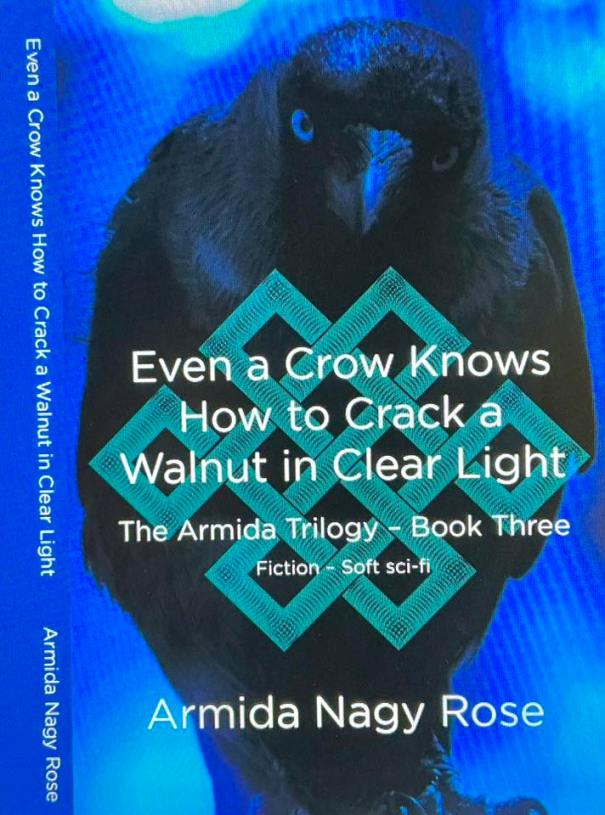
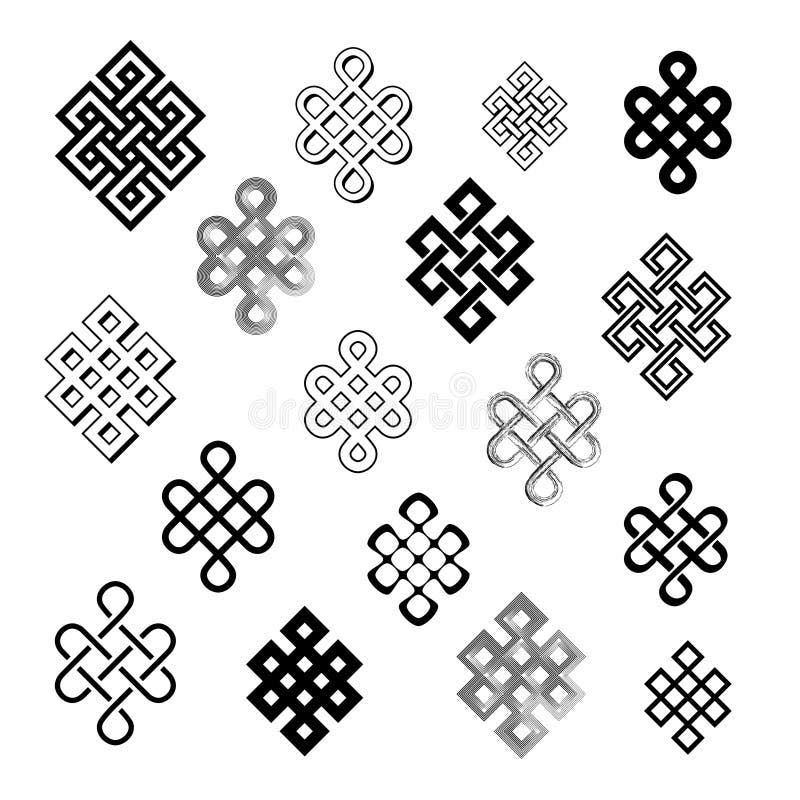
It may be safe to say that the novel Even a Crow Knows How to Crack a Walnut in Clear Light is undergirded by subtle Eastern philosophical views. For this reason, the the “endless knot” appears on the front and back cover of the book.
Known also as the “eternal knot,” it is a symbol that features a closed, looped design with no beginning or end. You may have seen it in Chinese art and knots, but it is a cultural market where Tibetan Buddhism is influential. We can even think it is somewhat like a torus in which the surface revolves as a continuous circle in three-dimensional space that creates a system that maximize grid capacity by storing excess electricity and by deploying the electrical charge when needed, thus aligning power generation as demanded.
On the other hand, the “endless or eternal knot” speaks of such energy in spiritual terms such as infinite wisdom and compassion, the interconnectedness of all phenomena, and the continuity of life, death and rebirth. Before indulging in the symbolic meanings, usage, and context of this symbol, please view the following link to know how this novel connects western and eastern philosophies, and modern physics. There are several philosophical/physics thoughts are injected in Even the Crow Knows….
Interdependence: Also known as dependent origination, it shows that all phenomena are interconnected and rely on causes and conditions.
Union of Wisdom and Compassion: The intertwined, inseparable nature of wisdom and method as compassion, are essential for enlightenment.
Endless Cycle: The union of opposites (e.g., calm and movement, Tao, yin-yang) and the dominant cycle of rebirth.
Buddha Shakyamuni’s Teachings: Remarkable teaching that manifest as boundless, omnipresent wisdom.
Usage and Context: Serves as a common cultural marker, art, amulets, and in sacred geometry to sere as a meditative focus on non-duality and unity.
Lastly, the knot, although slightly different in designs, is found in Hindu, Jain, and Celtic traditions, often signifying eternity or longevity. In ancient India, it was a symbol of auspiciousness and harmony.
As stated by Bulgarea Candin Stefan, “Interestingly, the religious symbol of the Eternity Knot is said to represent the interdependence between secular and religious matters. Originally, this symbol was associated with Vishnu and his abiding love for his consort Lakshmi, goddess of prosperity and wealth. You can find the endless knot symbol on various inspirational products such as infinite knot decor, infinite knot pendant, and more.
“Knots are certainly deeply rooted in our consciousness as archetypes.”
The author, however, implies that it represents the physics of the Tao’s yin-yang of Quantum Theory.
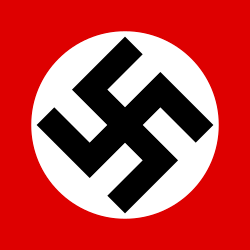
Did you know that the term “Nazi” (short for “Nationalsozialist”) was considered derisory even when the Nazi Party grew out of smaller political groups with a nationalist orientation that formed in the last years of World War I? Truly, and the three novels of the Armida Trilogy did not shy away from making reference to their existence. Their ideology represents, historically, racist ideology and devastation.
The undertaking sprung as early as 1918 as a league called the Freier Arbeiterausschuss für einen guten Frieden (“Free Workers’ Committee for a good Peace”). It was definitely a populist movement that formed when Germany was in great turmoil after four years of World War I. It was an opportunistic event during the period of the German Revolution (1918-1919). The aftermath of this short revolution was followed by a period of instability and violence. The aforementioned league coalesced by 1919 as the Nazi Party, known as the German Workers’ Party and soon thereafter was led by spellbinding Adolf Hitler from 1939 to 1945, using totalitarian methods with an ideology that led to the state-sponsored and systematic murder of up to 17 million Europeans (mostly the “undesirable” Jews, Roma, and Sinti (Slavic) people).
Of those murdered, the Jewish people were in the majority; and there were at least twelve known locations of extermination at which the notable ones were at the German-occupied Soviet Union (1,300,000), Auschwitz (100,000,000), Treblinka (925,000), and Jewish ghettos (800,000). [Statista.com, 2025.] There were many other people who did not get counted, but it is estimated that, during the war, millions of people deemed to be of lesser import were captured and used as slave laborers. Exploited, a large number died of exhaustion, individual execution, and starvation. A majority of these deaths were recognized as systemic “crimes against humanity.” How does this become possible in any era of history?
The film “Nurenburg” (2025) has recently been released and was based on journalist-historical writer Jack El-Hal’s book The Nazi and the Psychiatrist: Herman Gȫring, Dr. Douglas M. Kelley, and a Fatal Meeting of Minds at the End of WWII. Basically, the book follows Dr. Kelley’s evaluation of top Nazi leaders to determine if they were mentally fit to stand trial and to understand the alluring “Nazi mind” or possible pathological defects to explain their crimes. In summation, the doctor determined that the Nazi mind was distinctly developed to include blind ambition, weak ethical morals, and extreme nationalism. Kelley, nonetheless, during his interviews, was intellectually and psychologically drawn to the outlooks of these 22 charismatic Nazi leaders. What disturbed the doctor mostly was their sense of evil without obvious madness. Though he did not convert to Nazi beliefs, he concluded they were largely sane with a permissive, radicalized political system to uphold their belief system of a master race as Aryans.
(However, it is not hermetically certain that Dr. Kelley died by suicide by ingesting a capsule of potassium cyanide in front of his family or if he was mysteriously murdered by Nazi hunters. Suggestive but not conclusive especially no one who loves life would admit to have been threatened to admit a different story. We know how conspiracy theories work. Take this with a grain of salt.
(Nein, nein, nein. Bitte, passen Sie auf. Dr. Kelley did have a tragic death. The aforementioned paragraph is just an imaginary episode for the Netflix series, The Hunters, in portraying the aftermath of the ghost of Dr. Kelley in mentally experiencing the trauma of his tribe during WW II. Imagining to avenge in the face of evil is never sweet.)
At any rate, of all the top Nazi leaders, it was Heinrich Himmler who founded the SS Ahnenrbe (“Ancestral Heritage”) to trace and to reconstruct an ancient Aryan past. In fact, during sponsored expeditions to Tibet, he brought back the practice of mindfulness training, which was required of every SS officer to master. That is one reason SS officers in films are portrayed as removed from any emotional expression. When that failed, his Ahnenerbe teams focused on evidence of prehistoric Nordic-Aryan dominance. Nonetheless, it was Hitler’s beliefs that Germans were the modern descendants of “the superior ancient Aryans of the “Bronze Age” (“Eastern Europe”) and later of Nordic race as the “best” racial stock destined to rule. Afterall, there was Thor, a hammer-wielding god associated with thunder, storms, strength, protection, fertility, farmers, and free people. And then there is the Vedic Indra, the king of the devas and svarga, associated with thunder, lightning, weather, god of order who killed the great evil. Nazi archeology was used to justify and to frame invasions into Eastern Europe, for example, using political, strategic, and economic goals first.
There was never a human race as claimed by the Nazis. Modern Nazis don’t like to be referred to as Nazi; at best, they see themselves as a White Race. However, there is a reason why Caucasian was used as a race albeit an obsolete racial classification of humans with a biological taxonomic group that usually included ancient and modern populations from all or parts of Europe, Western Asia, Central Asia, South Asia, North Africa, and the Horn of Africa. The United States still uses the term to be synonymous for people considered “white” (thus perpetuating bigotry and racism) or of European, Middle Eastern, or North African ancestry. Nevertheless, biological diversity has advanced during the second half of the 20th century, which is based on genomic and population-based perspective of humans based on phenotype, ancestry, and cultural factors.
The original meaning of the term “Aryan” is mostly cultural or religious and means “civilized” or “noble”. Shakyamuni Gautama used the term “noble” to define his “noble truths.” In ancient times, “truth” was a means to understand life and existence through experience and observation (similar to the Buddha’s (“Charter of Inquiry” in italics below). The search for truth was not intended to be a belief system, because a belief system tends to truncate the search for truth. The latter refrains from consider new, valid information.
Charter of Inquiry – Buddha Shakyamuni’s Other Legacy, This Charter of Inquiry, provided by the Buddha Shakyamuni, is a guideline for thoughtful people on what they need to be aware of when exploring religious and spiritual values and beliefs. When Buddha Shakyamuni was asked by the Kalama people, “How do we know who is telling us the truth?”, he replied the following:
Do not accept anything because of–
1/ repeating oral transmission 2/ lineage or tradition 3/ it being written in books such as scriptures 4/ it being widely stated 5/ it being logical and reasonable 6/ it inferring and drawing conclusions 7/ it having been thought out 8/ acceptance and conviction through thinking about a theory 9/ the speaker appears consistent 10/ respect for the teacher.
He further added, “Know what things would be censured by the wise and which, if pursued, would lead to harm and suffering.”
MIDDLE BRONZE AGE
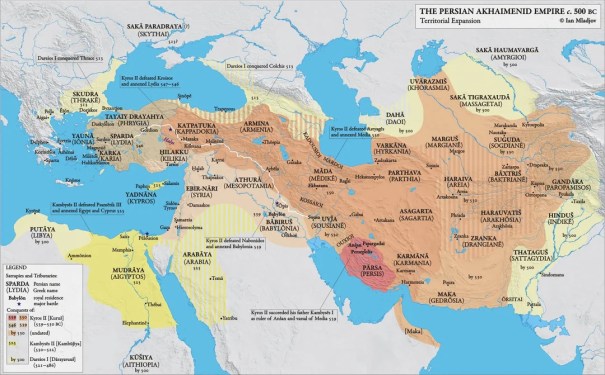
Map of the Aryan Persians Acahemenid Empire
Reaching back to the Bronze Age, a group of people emerged speaking an Indo-Iranian language in ancient Iran and in the northern Indian subcontinent. Indo-Aryan people (aka Indic or Vedic peoples) were a diverse collection of people who migrated from Central Asia into the northern Indian subcontinent, mainly residing west of the Indus River and later spreading eastwardly (modern-day Bangladesh, Bhutan, Nida, Nepal, Pakistan, and Sri Lanka. Another band of Indo-Aryan people migrated further westward and founded the Mitanni kingdom in northern Syria around 1500-1300 BCE. Evidence shows they were connected culturally, linguistically, and historically. Historically, the Aryans were the pastoralists who migrated from Central Asia and eventually horsemen, charioteers, and known as Scythians. Much of their migration was due to the emergence of climatic change that became colder and drier.
They shared cultural norms and language as they began to refer to themselves as arya (“noble”). The Indo-Aryans were united by shared cultural norms and language, referred to as aryā ‘noble’. Over four millennia, the culture evolved particularly inside India itself and eventually conflated with other values and heritages. We have the remnants of hymnal Gathas, Avesta and Rig Veda literature to attest to these Zoroastrian and Vedic heritages, despite genetic variances. The similar languages of the Zoroastrian Avesta and the Vedic Rig Veda, but not identical, indicate that these people were related and neighbors. The Avesta and Rig Veda scriptures are the only known ancient texts that contain references to Aryans, with the Avesta containing a preponderance of references to being Aryan, a concept central to the Avesta and Zoroastrian heritage.
As mentioned earlier, when the Shakyamuni Siddhartha Gautama spoke of the Noble Eightfold Path that is called arya maga in Sanskrit or ariya magga. When he taught the eight Noble Truths, he was indicating that they chose to advance spiritually—the noble ones, the spiritual elite, who obtain this status not from birth, social station, or ecclesiastical authority but from their inward nobility of character—by right view, right intention, right speech, right action, right livelihood. Right effort, right mindfulness, and right concentration. He recognized that the Brahmin Vedic system was self-righteous and instilled suffering to control the masses. His Noble truth is summed up like this: The truth (arya) about suffering; the truth on what causes suffering; the truth that suffering can cease in this lifetime; and the truth on how to cause suffering to cease.
Modern scholarship dates the founder of Zoroastrianism, Zarathushtra (aka Zoroaster), between 1500 and 1000 BCE and believed to been born in various parts of “Greater Iran.” However, it is likely that he came from Bactria or Chorasmia, regions that incorporate the Amu Darya (aka Oxus) river delta in western Central Asia, bordered on the north by the Aral Sea. (This was Saka territories under Darius I.) The land was fertile and known for its cavalry and role as a cultural crossroads, often linked with the “Aryan” people who migrated there, forming powerful kingdoms (similar to the legendary one in the Avesta), which formed a warrior aristocracy known for loyalty and fierce spirit.
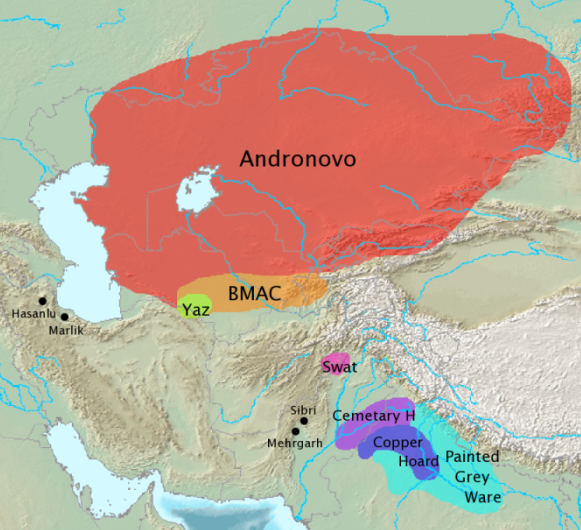
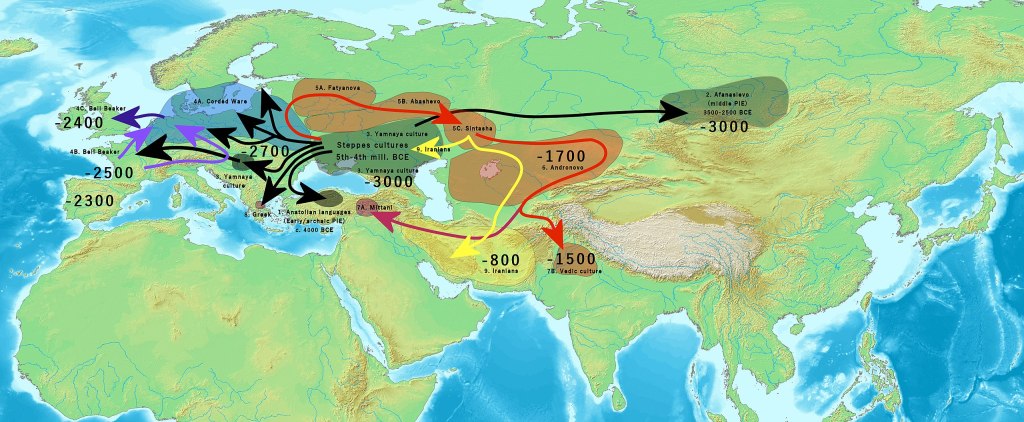
In summary, current anthropological-archeological migration is as follows: “The Proto-Indo-Aryan split off around 1800–1600 BCE from the Iranians, moved south through the Bactria-Margiana Culture, south of the Andronovo culture, borrowing some of their distinctive religious beliefs and practices from the BMAC, and then migrated further south into the Levant and north-western India. The migration of the Indo-Aryans was part of the larger diffusion of Indo-European languages from the Proto-Indo-European homeland at the Pontic–Caspian steppe which started in the 4th millennium BCE. The GGC, Cemetery H, Copper Hoard, OCP, and PGW cultures are candidates for cultures associated with Indo-Aryans.”
It bears repeating: The Aryan Race was never a race. Stay tuned, for there is still missing knowledge of how migrations influenced history by various commonalities. In fact, if racism were to be eradicated, there would only be one Homo sapiens sapiens of modern humans.
The Indo-Iranian Migration
Scheme of Indo-European language dispersals from c. 4000 to 1000 BCE according to the widely held Kurgan hypothesis.
Anonymous recently said, "Beware. The White monsters walk the streets in the United States of America."
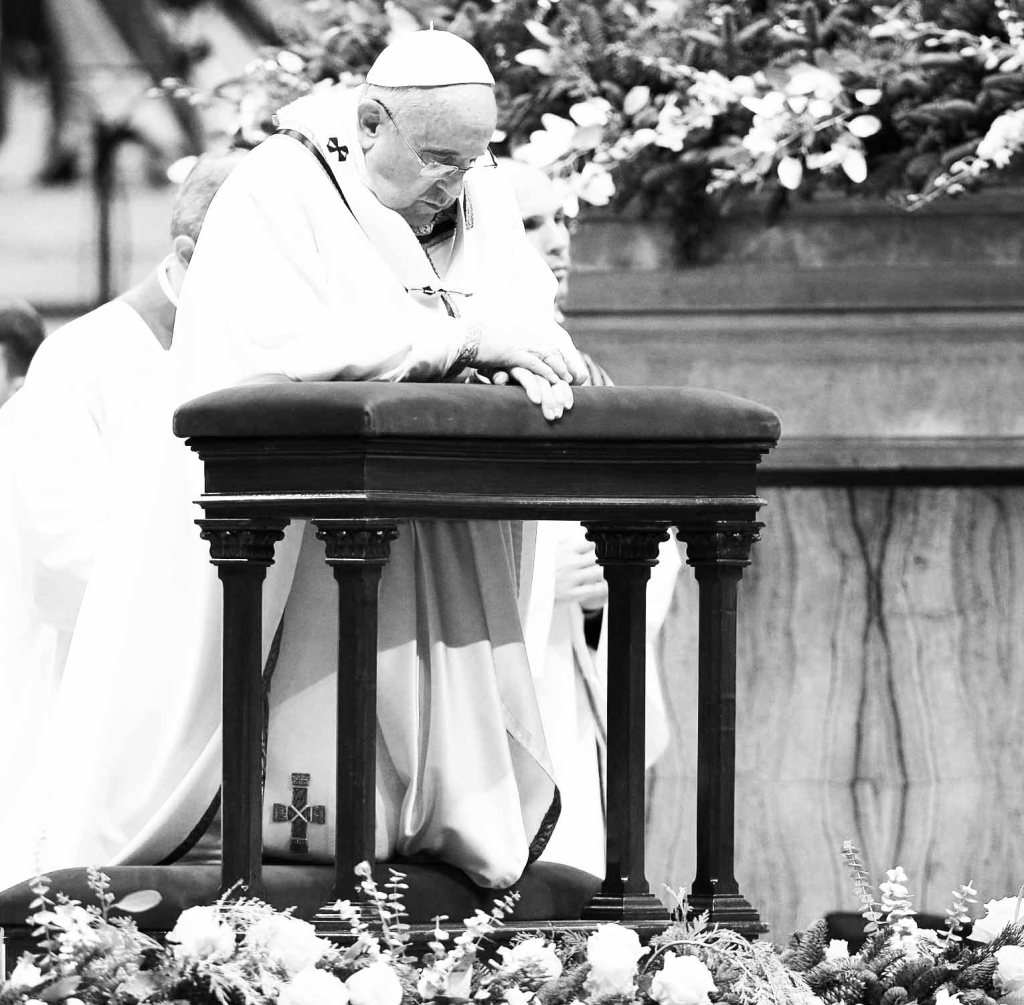
Rest in Peace, beloved Pope Francis. Many faithful cherished your compassion, courage, faith, and vision for relevancy in a chaotic world.
As reported by CNN, “Pope Francis, who challenged deeply rooted norms and made it his mission to change the perception of the [Roman] Catholic Church around the world, has died at the age of 88. The Vatican said Francis died just after 7:30 a.m. . . . on Monday [Italian time], a day after he surprised many by appearing at St. Peter’s Square . . . on Easter Sunday [April 20-21, 2025] . . . .”
“Love is the greatest power for the transformation of reality because it pulls down the walls of selfishness and fills the ditches that keep us apart.”
In Choir of Cloistered Canaries, the essence of Pope Francis was captured in the fictional Pope Hormisdas II. Just as Pope Francis, Pope-Saint Hormisdas I was no ordinary pontiff. Pope Francis and fictional Pope Hormisdas II were visionaries of a fragile Roman Catholic Church in need of revival to survive. (One will find Pope Hormisdas an interesting an enlightened pontiff.)
Pope Francis was a reformer. Much will be written about him in coming days with beautiful eulogies, but he had his enemies, like Opus Dei, to give the Pontiff a black eye.
Often referred to as the “People’s Pope,” the Pontiff sought to make the Roman Catholic Church more relevant. He rocked the boat continuously—by addressing past scandals, embracing the plights of migrants, and supporting the many poor and other marginalized faithful (the LGBTQ population, for example) out of the 1.4 billion Roman Catholic faithful worldwide. Moreover, he weeded out the financial corruption at the Vatican, railed against rogue capitalism, and warned against the effects of climate change. Some would call him a liberal as if it were a mark on his character. No pope has ever had the illustrious character and courage to face the conflicting issues glossed over by the traditionalists within the Vatican.
Will the next pontiff be another traditionalist, affirming that Pope Francis committed heresy—for example, for softening the ban on giving Communion to divorced and civically re-married Catholics? For others, he was not progressive enough: He was against abortion, in favor of clerical celibacy, and opposed to ordaining women even though he was open to giving women more of a role in running the church. However, he did something more than the previous Pope to weed out sexual abusers from the clerical ranks.
He also railed against world leaders who sought no humane solution to the mass migrations of people cause by climate change and political squabbles such as civil wars and the like. He said, “We cannot remain indifferent in the face of such human dramas. The globalization of indifference is a very ugly disease. Very ugly.”
“Who am I to judge them.”
To know more about Pope Hormisdas II, who embraced the Eastern Catholic Church, click here: Hormisdas.
A backstory: When the author wrote about Pope Hormisdas II writing Leitis to let her know he was visiting Panama (page 264) and wanted to meet with her in another private session, Ms. Nagy did not know there was an actual schedule by Pope Frances (Francesco) to Panama toward the end of January 2019. Also, the author is not of the Catholic faith; but she saw him as a contemporary hero.



 Armida Nagy Rose Author