
Why the Y Chromosome?
This blog is best appreciated with a previous blog, “Homosexualism?”. It relates to a recent biological science (as of June 2025) from the Stanford University School of Medicine by Dr. Nirao Shah, MD, PhD, neurobiologist, and his team who have studied how the female and male brains differ and how those differences arise from different genes and hormonal diversity during fetal development. The gist of their finding, as it pertains to the earlier above-mentioned blog, is that hormones act on genetics in utero, which have both organizing and activating effects during two stages of life—in utero and in puberty.
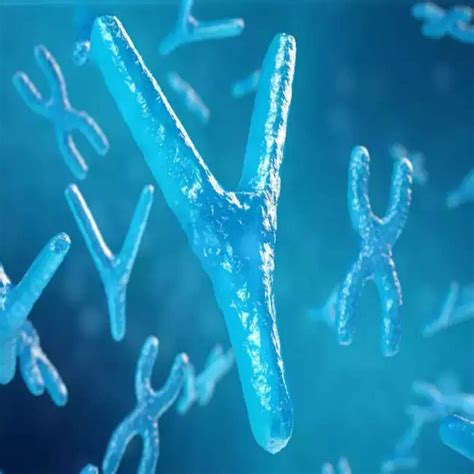
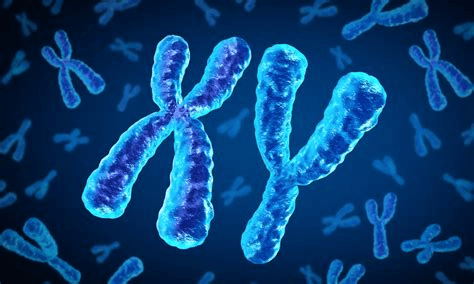
There are 22 pairs of autosomes shared by the sexes, and then there are the X and Y that are gender specific. Females have two X chromosomes (XX); males have one X and one Y chromosome. Basically, since chromosomes contain genes that contain information, there is one particular chromosome that makes up the male—Y in XY.
Generally speaking, the 22 pairs of autosomes determine traits and other non-sex-related characteristics. However, the Y chromosome carries the SRY gene that determines if the Y chromosome will have testicles or not. Repeat, it is the SRY gene of the sex-determining region Y chromosome that determines if the embryo will hae testicles or not. It is the master switch for male sex determination in mammals, which encodes a protein that initiates the development of testes in a fetus. It, moreover, acts as a transcription factor, binding the DNA and triggering a cascade of gene activity. Without a functional SRY gene, the development of the female embryo happens. It also may prevent the development of female reproductive structures like the uterus and the fallopian tubes.
Moreover, the SRY gene can lead to sex reversal. An embryo with a Y chromosome (XY) can develop female characteristics. In rare cases, the XX embryo can develop male features. Nevertheless, without conclusive scientific evidence, it is presumptive to conclude that the SRY gene is a mutation; but the study of the SRY gene can provide insights into the development of sex-linked expressions and not necessarily disorders or good versus bad mutations. At any rate, a gene mutation that changes the nucleotide sequence of a single gene—such as a substitution, insertion, or deletion of one or a few DNA bases—can affect a single protein.
Why question our differences; embrace them as we do the variety of birds and flowers and trees….
Postscript: Check out “Homosexualism?” Other links of interest: Gender Fluidity was Never a Phrase and The History of Two-Spirit Folks.
It is really important, in a world that is often very ‘either/or’, to remember there can be both, neither and everything–that is, other than the ‘binary’ of male or female.
-–Sally Goldner
 Armida Nagy Rose Author