
Rest in Peace, beloved Pope Francis. Many faithful cherished your compassion, courage, faith, and vision for relevancy in a chaotic world.
As reported by CNN, “Pope Francis, who challenged deeply rooted norms and made it his mission to change the perception of the [Roman] Catholic Church around the world, has died at the age of 88. The Vatican said Francis died just after 7:30 a.m. . . . on Monday [Italian time], a day after he surprised many by appearing at St. Peter’s Square . . . on Easter Sunday [April 20-21, 2025] . . . .”
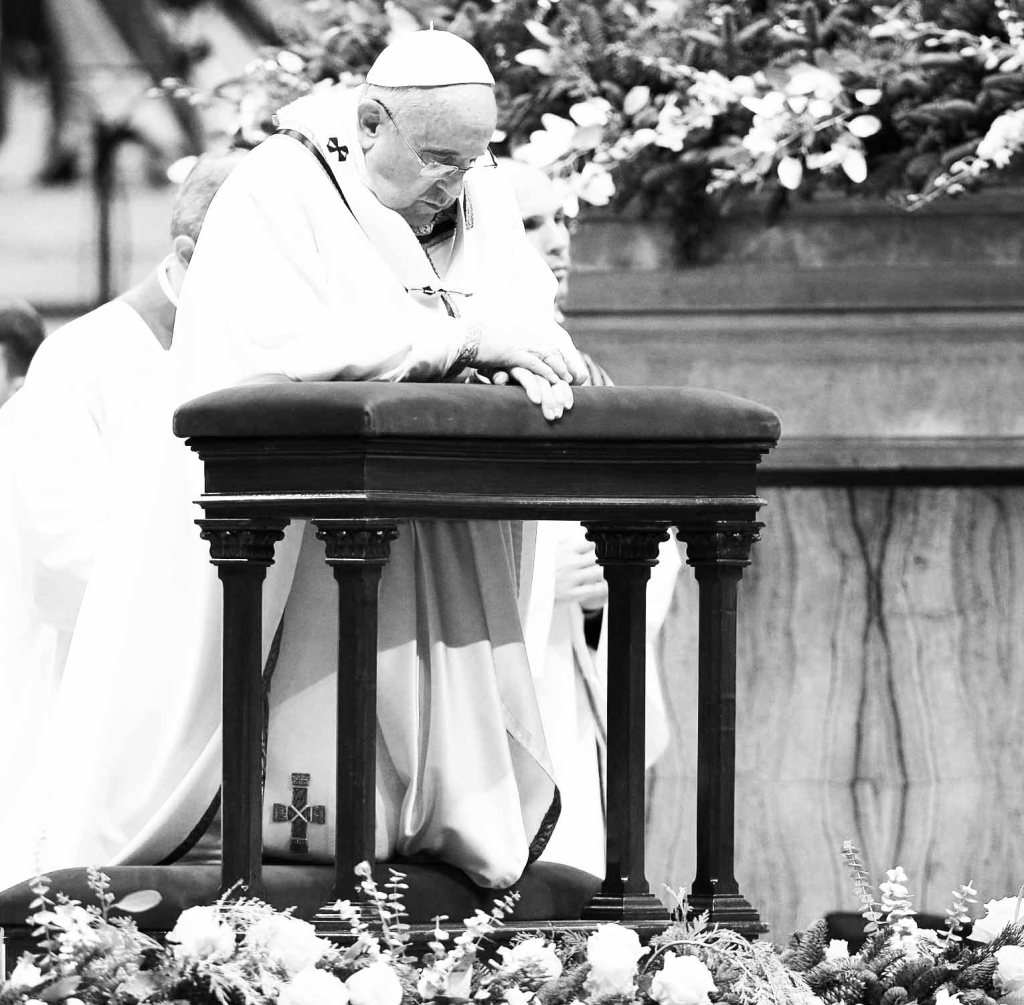
“Love is the greatest power for the transformation of reality because it pulls down the walls of selfishness and fills the ditches that keep us apart.”
In Choir of Cloistered Canaries, the essence of Pope Francis was captured in the fictional Pope Hormisdas II. Just as Pope Francis, Pope-Saint Hormisdas I was no ordinary pontiff. Pope Francis and fictional Pope Hormisdas II were visionaries of a fragile Roman Catholic Church in need of revival to survive. (One will find Pope Hormisdas an interesting an enlightened pontiff.)
Pope Francis was a reformer. Much will be written about him in coming days with beautiful eulogies, but he had his enemies, like Opus Dei, to give the Pontiff a black eye.
Often referred to as the “People’s Pope,” the Pontiff sought to make the Roman Catholic Church more relevant. He rocked the boat continuously—by addressing past scandals, embracing the plights of migrants, and supporting the many poor and other marginalized faithful (the LGBTQ population, for example) out of the 1.4 billion Roman Catholic faithful worldwide. Moreover, he weeded out the financial corruption at the Vatican, railed against rogue capitalism, and warned against the effects of climate change. Some would call him a liberal as if it were a mark on his character. No pope has ever had the illustrious character and courage to face the conflicting issues glossed over by the traditionalists within the Vatican.
Will the next pontiff be another traditionalist, affirming that Pope Francis committed heresy—for example, for softening the ban on giving Communion to divorced and civically re-married Catholics? For others, he was not progressive enough: He was against abortion, in favor of clerical celibacy, and opposed to ordaining women even though he was open to giving women more of a role in running the church. However, he did something more than the previous Pope to weed out sexual abusers from the clerical ranks.
He also railed against world leaders who sought no humane solution to the mass migrations of people cause by climate change and political squabbles such as civil wars and the like. He said, “We cannot remain indifferent in the face of such human dramas. The globalization of indifference is a very ugly disease. Very ugly.”
“Who am I to judge them.”
To know more about Pope Hormisdas II, who embraced the Eastern Catholic Church, click here: Hormisdas.
A backstory: When the author wrote about Pope Hormisdas II writing Leitis to let her know he was visiting Panama (page 264) and wanted to meet with her in another private session, Ms. Nagy did not know there was an actual schedule by Pope Frances (Francesco) to Panama toward the end of January 2019. Also, the author is not of the Catholic faith; but she saw him as a contemporary hero.
 Armida Nagy Rose Author