
The author of the first two books of The Armida Trilogy, revisits Panama as a source of insights into the varied cultures and historical contexts of the area as a major trading post in world affairs.
The Panama Canal Zone was a U.S.-controlled territory by the U.S. Corps of Engineers in the Republic of Panama from 1903 to 1979. It took over the French in building the canal and then to operate and to maintain the Panama Canal. It then became known as the Zona del Canal de Panama–a strip of land across the Isthmus of Panama, approximately 50 miles ling and extending about five miles on either side of its centerline, excluding Panama City, and Colon. The administrative center of the US-controlled territory was Balboa, Canal Zone.
To this day, the Panama Canal is a critical artery for global trade, significantly reducing shipping times and cost. But it also serves as a strategic asset for the United States and in influencing geopolitical dynamics.
Under the Hay-Bunau-Varilla Treaty of 1903, Panama, following its independence from Colombia, granted the United States to exercise authority within the Canal Zone as if it were sovereign.

In exchange Panama received $10 million and an annual annuity of $250,000, enabling the United State to construct and to operate the Canal Zone without interference from Panamanian authorities. As a strategic waterway, it connected the Atlantic and Pacific Oceans. Its presence shortened maritime travel by thousands of nautical miles, thus avoiding the dangerous route around Cape Horn, the southernmost headland of the Tierra del Fuego archipelago of southern Chile. (Even the Crow Knows… takes the readers to this area of Latin America instead of Panama.)
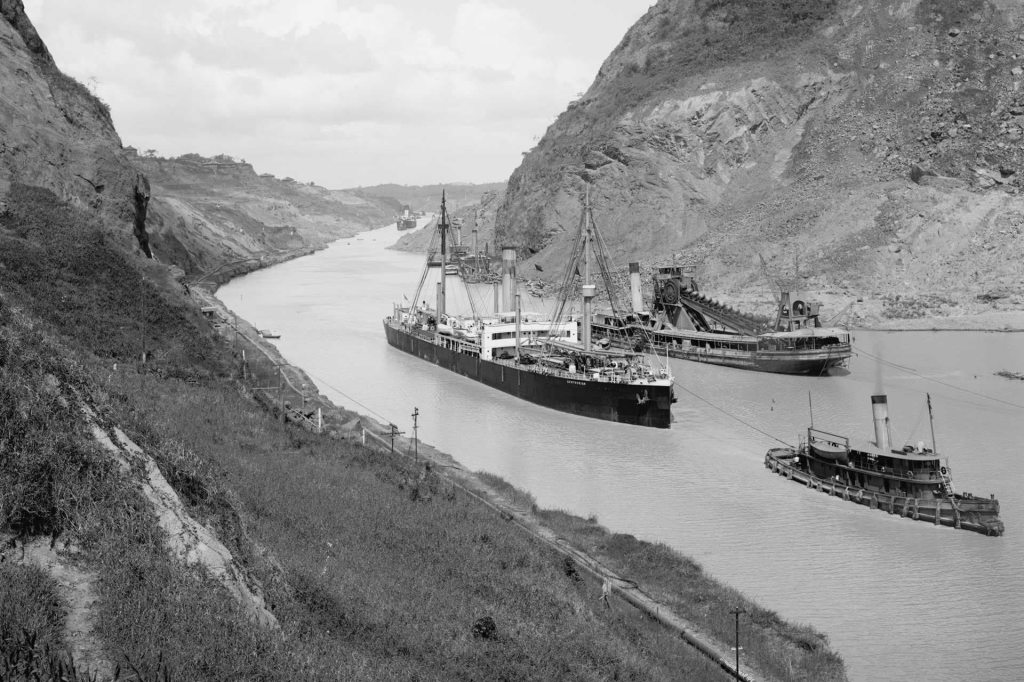
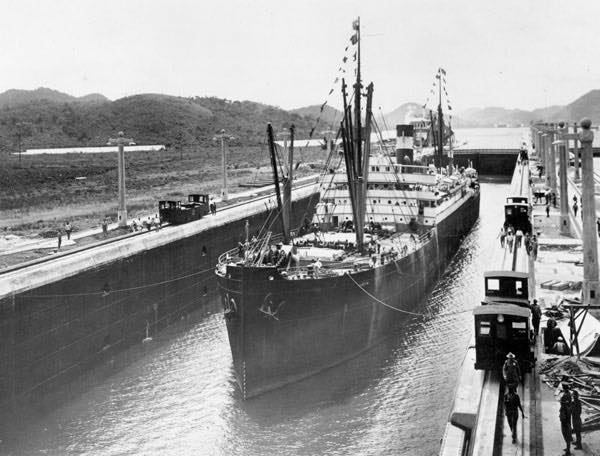
The US Canal Zone was abolished on October 1, 1979, under the Torrijo-Carter Treaties, which returned administrative control to Panama. A transition period was agreed upon between Panama and the United States, allowing the latter to pull out its military bases and civilian corps until December 31, 1999. This period also arranged for the United States personnel to train the Panamanians on how to operate the Canal Zone. A little known fact about the end of U.S. presence was the courts found that the United States had violated its original treaty by not allowing joint administration of the Canal Zone from its inception! Another unknown fact was that the American business community lobbied the U.S. Congress because of its maritime concerns and reputation.
The idea of a canal across the Isthmus of Panama was soon formulated after the Spanish conquest of the area in 1529. It was a lieutenant of conquistador Vasco Nunez de Balboa by the name of Alvaro de Saavedra Ceron who suggested it. But the serious attempt (1880-1889) to build a sea-level canal came from Ferdinand de Lesseps, the French engineer who had successfully built the Suez Canal. Its completion failed due to disease, terrain, and antisemitism at home that led to financial problems.
The current affair of the Panama Canal Zone has become a political football. The 47th President of the United States has publicly vowed to “take back” the Panama Canal from Panama and claimed China controls it. However, in practice, the Panama Canal is still run by the canal authority of Panama and remains legally Panamanian.
Who controls the canal right now
- The Panama Canal has been under full Panamanian sovereignty since the Torrijos–Carter Treaties were completed in 1999, and it is operated by the autonomous Panama Canal Authority (ACP), not by the U.S. or China.
- Panama’s constitution and a separate neutrality treaty state that the canal must remain neutral and open to all nations in peace and war, with Panama responsible for its administration and security.
US 47th President claims and actions
THIS IS HOW THE WATERS GOT MUDDIED!

- Since returning to office, the 47th President has repeatedly said that the given away and alleging that China “operates” or “controls” it. and nearby infrastructure.
- China does not operate the canal itself, but Chinese-linked companies from Hong Kong have held long-term concessions at ports on each end of the canal and have invested in related logistics and infrastructure in Panama.
- U.S. officials close to the US President argue that this presence could be used to pressure or disrupt U.S. shipping in a crisis, which is part of why the administration is pushing back diplomatically and economically.
Response of Panama
Panamanian President José Raúl Mulino and the ACP have rejected the US Administration’s assertions, insisting that Panama alone runs the canal, that fees are applied equally to all ships, and that there is no Chinese operational control. Mulino has said there is “no possibility” of negotiating any transfer of ownership back to the United States and has stressed that Panama intends to uphold the canal’s neutrality.
Legal and practical status
- Under current treaties, the U.S. has a right to help defend the canal’s neutrality but no right of ownership or routine operational control; any U.S. move to “take it back” without Panama’s consent would violate Panamanian sovereignty and established international norms.
- So as of now, the “status” is: Trump is applying political, military‑planning, and economic pressure around the canal, but control in law and in day‑to‑day operation remains with Panama, not with the U.S. or China.
As of this first week in March 2026, the U.S. President claimed he got rights over the Panama Canal for $1.00. That is hard to believe. In February 2026, under U.S. pressure, Panama seized two ports previously run by a joint Hong Kong-UK company. This was a Panamanian government action, not a U.S. purchase, and it still did not give the U.S. control of the canal.
There is zero reporting of any sale, transfer, or lease of the Panama Canal to Trump or the U.S. for any amount. The canal remains under the control of the Panama Canal Authority, as established by the 1999 Torrijos–Carter Treaties.
Posted March 11, 2026
 Armida Nagy Rose Author