
A retiring CDC epidemiologist reunites with her estranged mother and is swept from a secretive lab in North Carolina to Rome, where science, mythology, and a surprising papal alliance ignite a transnational fight for environmental justice and moral stewardship.
Choir of Cloistered Canaries – Book Two (2020) is a thought-provoking, multi-layered novel that fuses epidemiology and psychology with ancient symbolism, environmental activism, and mystical exploration – wrapped in an emotionally-grounded take of reconnection, love, and resistance against ethical erosion. It uses the canary as metaphor to champion environmental guardianship and justice for all.
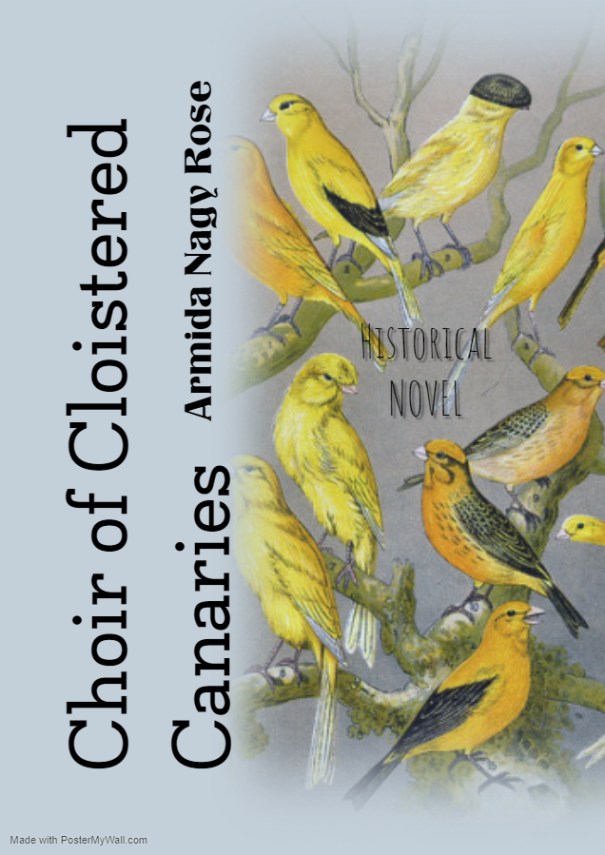
Anyone who is interested environmental justice when science meets spirituality would be attracted to the environmental appeal and intellectual adventure.
Leitis Dennett, a senior CDC epidemiologist about to retire, is called to a secretive laboratory at the North Carolina Research Campus to reconnect with her estranged mother of several decades. As a member of the CDC Rapid Response Team, her visit to her mother is cut short to join the team headed for The Vatican and Rome, Italy. It is there that a fortuitous relationship with Pope Hormisdas II develops.
It is also at this journey that she meets a medical engineer who joins her to further improvements on public health and to combat environmental degradation, echoing President Eisenhower’s warning in 1961 against unchecked industrialization and over consumption.
The novel resonates with modern concerns—clean air, water, and earth—representing “our song as canaries,” a metaphor for how human signal ecological distress. Leitis blends her epidemiology expertise with her passion for comparative mythology and alchemy, searching for hidden meanings in ancient symbols.
Beyond global stakes and politics, the novel is deeply personal—a mother and daughter healing almost a half-century of separation.
If you are drawn to environmental activism, ethical science, and storytelling where ancient wisdom meets modern dilemmas, this novel delivers. Even as a human story, it is framed within larger questions of mortality and stewardship.
In summary, Choir of Cloistered Canaries blends a personal mother-daughter reunion with a global quest to expose and counteract corporate greed, sacred symbolism, and environmental collapse. It asks readers to listen to the Earth’s “canary” warnings.
There are four principal characters worth mentioning:
- Leitis Dennett, senior CDC epidemiologist; scientifically rigorous, spiritually curious, seeking personal reconciliation.
- Pope Hormisdas II, a reformist pontiff; bridges ritual authority with ecological ethics.
- Medical Engineer, an inventive, pragmatic, driven to translate technology into public-good solutions.
- Leitis’s Mother, estranged from her daughter, complex, catalyst for Leitis’s emotional reckoning.
 Armida Nagy Rose Author