
As a historical novel, the story is a sensuous, spiritually charged, multi‑generational epic of danse du ventre, wartime exile, and Sephardic‑Ladino life.

oOo
Set across the first half of the 20th century, Daughters of the Dance follows three generations of women—beginning with Dara, an Algerian expatriate whose belly dance both scandalizes and frees her—against the upheavals of war, migration, and religious conservatism. Woven through the Sephardic‑Ladino community of Willemstad and across Europe and the Americas, the novel reframes dance as spiritual discipline, sexual agency, and cultural memory.
In summary, the following are principle themes and motifs:
(1) Female agency and embodiment is explored through dance as resistance and healing. (2) Spiritual symbolism draws on Sufi and Buddhist imagery. (3) Diaspora, identity, and belonging within Sephardic-Ladino networks across the Netherlands, Panama, Spain, Mexico, Venezuela, and Curaçao. (4) War, exile, and cultural survival are forces that shape intimate and public lives. And (5) sexuality and moral conflict are framed with literary seriousness and mature boundaries.
Three interlinked protagonists—Dara, Ayana, and Nona—navigate colonial pressures, nascent nationalist movements, and clandestine intellectual salons. Dara embodies the Creatrix, Ayana the Mystic/Lover, and Nona the Maiden/Warrior. The novel balances political intrigue, secret correspondence, and philosophical debate as each woman makes sacrifices to secure spiritual and social autonomy for future generations.
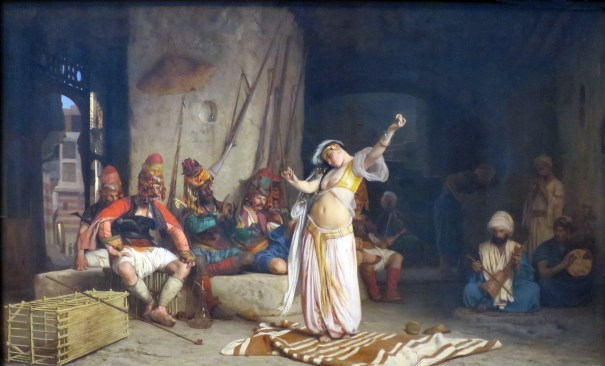
La danse de l’almée (The Dance of the Almeh) by Jean-Léon Gérôme, 1863
This first novel is a mature exploration of sexuality, power, religious suppression, and female liberation. When danse du ventre was exhibited at the 1893 Chicago World’s Fair, it gained national attention with dancers from various Middle Eastern countries, and subsequently, the sexualization of the dancers and the dance.
 Armida Nagy Rose Author